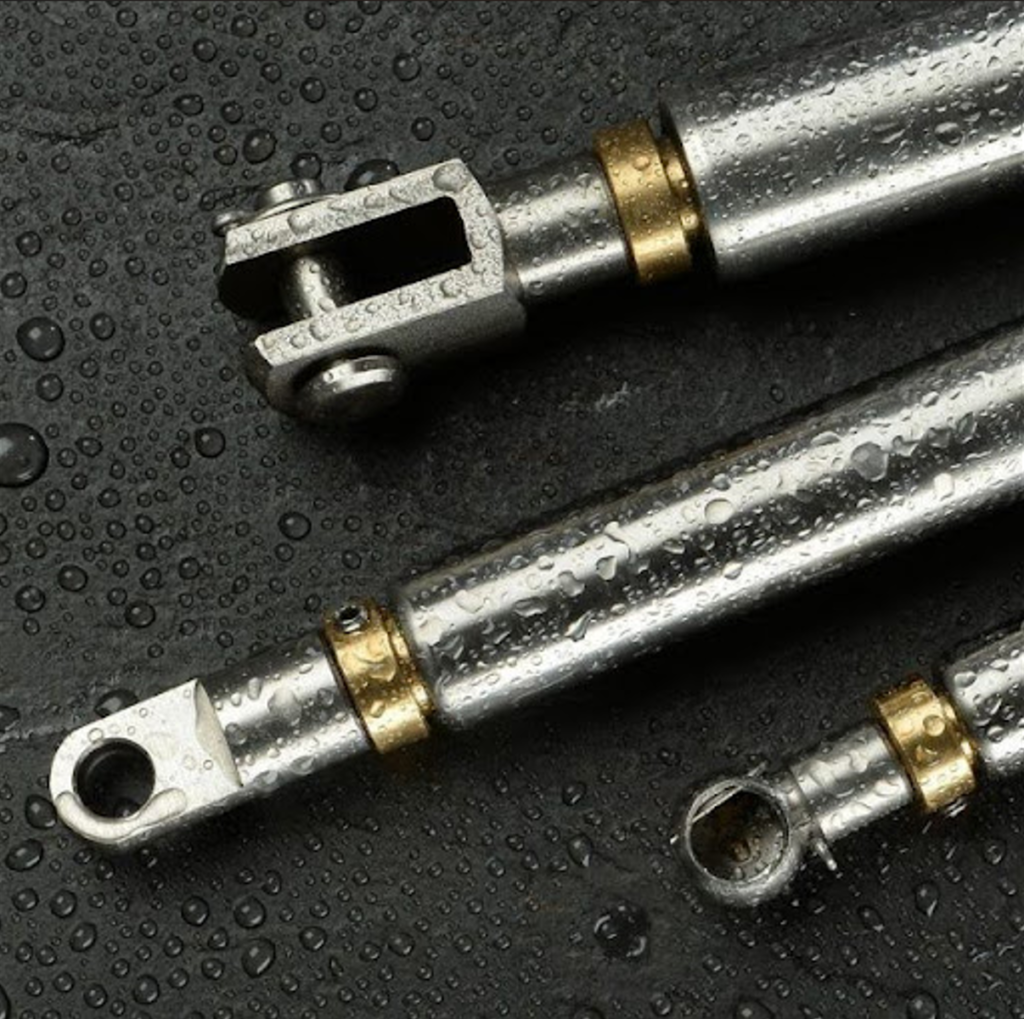
Not every gas spring application requires stainless steel. In many standard indoor environments, a conventional gas spring may be perfectly suitable. But when the operating conditions become more demanding, material choice starts to matter much more.
That is where stainless steel gas springs become relevant.
They are often preferred in applications where corrosion resistance, durability, hygiene, or environmental exposure are part of the design requirements. In those cases, the gas spring is not just a supporting component. It also needs to remain reliable in conditions that may be harsher than normal industrial use.
For engineers, OEMs, and purchasing teams, the question is usually not simply whether a gas spring can provide the required force. It is whether the gas spring can continue to perform well in the actual environment where it will be used.
- 1 What is a stainless steel gas spring?
- 2 Why stainless steel gas springs are preferred in demanding environments
- 3 Common applications for stainless steel gas springs
- 4 Stainless steel gas springs vs standard gas springs
- 5 Material considerations
- 6 What should be considered before selecting stainless steel gas springs?
- 7 When custom stainless steel gas springs are the better option
- 8 Why stainless steel gas springs are often chosen early in the design stage
- 9 A practical way to evaluate the application
- 10 Conclusion
- 11 Need help selecting the right stainless steel gas spring?
What is a stainless steel gas spring?
A stainless steel gas spring is a gas spring manufactured with stainless steel components in order to improve suitability for challenging environments. Like a standard gas spring, it is used to support lifting, lowering, opening, closing, or positioning moving parts. The main difference lies in the material selection.
In applications exposed to moisture, washdown conditions, corrosive agents, outdoor weather, or hygiene-sensitive environments, stainless steel may offer a more suitable solution than standard steel alternatives.
That does not mean stainless steel is automatically necessary in every project. But in the right environment, it can make a significant difference to long-term performance and reliability.
Why stainless steel gas springs are preferred in demanding environments
The main reason is usually corrosion resistance. In many applications, the surrounding environment can gradually affect the condition of the gas spring if the material is not well suited to that exposure.
This can be relevant in situations involving:
- humidity
- water exposure
- marine conditions
- cleaning chemicals
- outdoor installations
- food-processing areas
- hygienic environments
- certain medical or laboratory applications
In such cases, stainless steel gas springs are often chosen because they can offer better resistance to these conditions and help maintain more consistent long-term performance.
There is also a practical side to this. In many products, the gas spring is visible and accessible. Material quality can therefore affect not only function, but also the overall impression of the product.
Common applications for stainless steel gas springs
One of the reasons this topic is important is that stainless steel gas springs are used across a wide range of industries. The need does not come from one single market. It appears wherever the environment places higher demands on the hardware.
Marine applications
Marine environments are one of the most common reasons for choosing stainless steel. Salt air, moisture, and outdoor exposure can be difficult conditions for many components. In these applications, stainless steel gas springs are often used on hatches, lids, storage compartments, seating systems, and access panels.
Food and hygienic equipment
In food-processing or hygiene-sensitive environments, material choice is often closely linked to cleaning requirements and general suitability for the operating area. Stainless steel gas springs may be preferred for covers, access doors, and machine elements that need reliable movement support while also fitting the environment.
Medical and laboratory equipment
In some medical and laboratory applications, clean design, corrosion resistance, and overall material suitability are important considerations. Stainless steel gas springs may be selected for covers, panels, and movable components where the operating environment requires a more considered material choice.
Outdoor equipment
Outdoor products are regularly exposed to changing temperatures, humidity, rain, and general environmental wear. In such cases, a stainless steel gas spring may be a more reliable option than a standard finish designed mainly for indoor use.
Industrial equipment in challenging conditions
Some industrial applications involve moisture, aggressive cleaning routines, chemical exposure, or demanding service conditions. In these environments, stainless steel gas springs can offer a more suitable combination of durability and environmental resistance.
Stainless steel gas springs vs standard gas springs
At a basic functional level, both types perform the same job. They provide controlled force to support movement. The difference is not the operating principle. The difference is where they are intended to work.
A standard gas spring may be entirely adequate for many machines, enclosures, and indoor applications. But once the operating environment becomes more demanding, the material can become part of the engineering decision.
That is why the comparison between stainless steel gas springs and standard gas springs should not be made only on price or nominal force. It should be made in the context of the application itself.
If corrosion risk, cleaning exposure, humidity, or outdoor use are part of the project, stainless steel may be the more appropriate choice.
Material considerations
Our stainless steel gas springs can be manufactured using AISI 316L stainless steel, making them well suited for applications where corrosion resistance and long-term material reliability are especially important. We can also supply stainless steel end fittings and special stainless steel metal brackets to support proper installation and maintain material consistency throughout the assembly. For a broader overview of available product options, sizes, and connection components, you can also review our catalog.When stainless steel gas springs are discussed, material grade often becomes part of the conversation. In some projects, stainless steel options may be selected according to corrosion resistance, hygiene expectations, or project-specific environmental requirements.
This should always be reviewed in relation to the actual application. The best material choice depends on where the gas spring will be used, how it will be exposed, and what level of resistance is expected over time.
For that reason, material selection should not be based on a general assumption alone. It should be considered together with the full operating conditions of the product.
What should be considered before selecting stainless steel gas springs?
Choosing the right gas spring involves more than deciding on material. Stainless steel may be the correct direction, but the spring still needs to fit the application mechanically and functionally.
Important points to review include:
Force requirement
The gas spring must generate the correct support force for the load, opening angle, center of gravity, and desired movement.
Stroke
The stroke must match the travel distance required in the application.
Extended and compressed dimensions
The available installation space often determines whether a given model is practical.
End fittings and mounting configuration
The gas spring may require eyelets, forks, ball joints, or other end fittings depending on the movement geometry and assembly method.
Installation orientation
How the gas spring is mounted can affect performance, motion behavior, and service life.
Environmental conditions
This is often the key reason stainless steel is being considered in the first place. Moisture, cleaning agents, salt exposure, and outdoor weather should all be evaluated carefully.
When custom stainless steel gas springs are the better option
In some cases, a standard catalog product is sufficient. In others, it is not.
A project may require a specific force value, custom stroke, special dimensions, or particular end fittings. In such situations, custom stainless steel gas springs may be a better solution than trying to adapt a standard part.
This is especially relevant for OEM projects, equipment manufacturers, and applications where the gas spring needs to fit into a specific product design rather than work as a general replacement item.
Custom solutions can also be useful when environmental resistance and dimensional accuracy both matter at the same time.
Why stainless steel gas springs are often chosen early in the design stage
One of the practical advantages of choosing the right material early is that it reduces the risk of redesign later. If the application is already known to involve corrosion exposure, hygiene requirements, or outdoor service conditions, it usually makes sense to consider stainless steel from the start.
Waiting too long to review the environment can lead to avoidable changes later in development. In that sense, selecting stainless steel gas springs is not only about material performance. It can also support a more stable design process.
A practical way to evaluate the application
When deciding whether stainless steel is necessary, it helps to ask a few simple questions:
- Will the gas spring be exposed to water or humidity?
- Will it be used outdoors?
- Will it be cleaned frequently?
- Will it operate in a marine or corrosive environment?
- Is hygiene or surface cleanliness important?
- Is long-term appearance also a concern?
If the answer to several of these questions is yes, stainless steel is often worth serious consideration.
Conclusion
Stainless steel gas springs are not needed in every application, but they can be the right choice when the operating environment is more demanding than standard indoor conditions. Their value comes from more than appearance alone. In the right setting, they can provide a better fit for corrosion resistance, hygiene, durability, and long-term reliability.
Whether the application involves marine equipment, food-processing machinery, medical devices, laboratory systems, or outdoor installations, the gas spring should be selected according to the real service conditions of the product.
A well-matched stainless steel gas spring supports not only movement, but also the overall suitability of the design.
Need help selecting the right stainless steel gas spring?
If your application involves moisture, corrosive conditions, outdoor exposure, or hygiene-sensitive environments, our team can help you review the most suitable gas spring solution based on your project requirements.
If you would like to take a closer look at our production capabilities, you can also watch our factory introduction video here.