
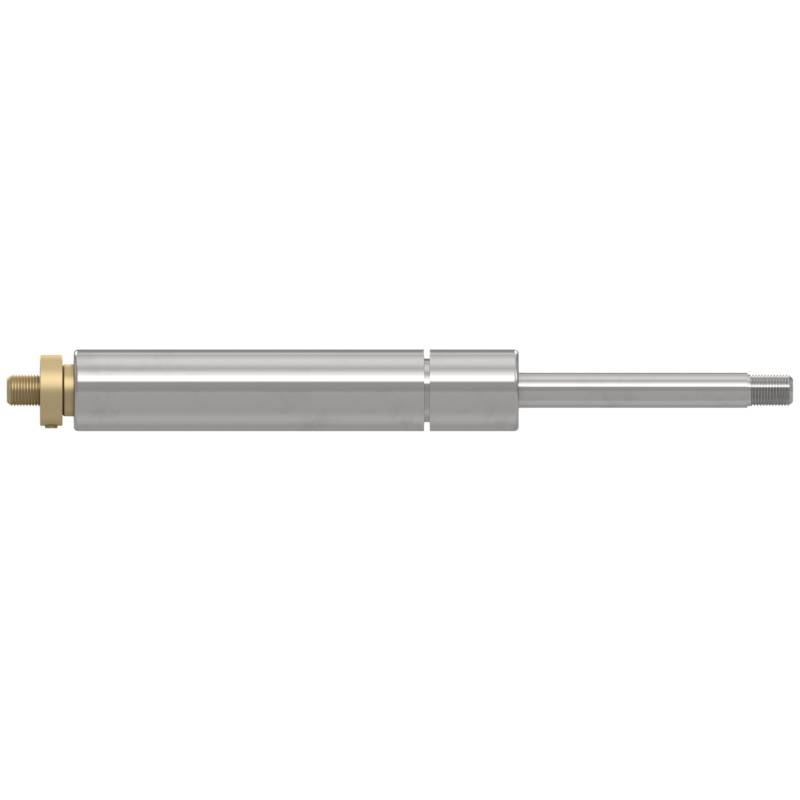
Stainless Steel Gas Springs
Stainless steel gas springs are used when moisture, saltwater, cleaning chemicals or frequent wash-down procedures make conventional carbon-steel products unsuitable.
At Newtone Gas Springs, we manufacture stainless steel gas springs and stainless steel gas struts for applications where corrosion resistance, clean operation and dependable force are part of the design requirement rather than optional extras. These products are commonly selected for marine equipment, outdoor enclosures, food-processing machinery, pharmaceutical systems, medical devices and industrial installations exposed to demanding environmental conditions.
The correct specification depends on more than the required stroke and force. The stainless steel grade, sealing system, operating temperature, mounting geometry and lubricant must all be considered together. For this reason, we review each application individually and manufacture the gas spring around the actual working conditions.
Stainless Steel Gas Springs for Demanding Working Conditions
A standard gas spring may work reliably indoors but deteriorate much faster when installed on a boat hatch, an outdoor cabinet or equipment that is cleaned repeatedly with water and chemicals. Corrosion normally begins around exposed surfaces, connection points or areas where moisture remains after operation. Once corrosion reaches the piston rod or sealing area, the service life of the gas strut can be reduced considerably.
Stainless steel gas springs address this problem by combining controlled lifting or counterbalancing force with a material structure better suited to wet, hygienic and corrosive environments. They are often referred to as stainless steel gas struts, stainless gas springs, corrosion-resistant gas springs, marine gas springs or stainless steel lift supports, depending on the country and application.
We manufacture these products for both new equipment and replacement projects. Customers may provide a technical drawing, an existing part number, a sample product or the basic application dimensions. Our team can then evaluate the required force, stroke, extended length, compressed length, mounting points and suitable stainless steel grade.
Designed Around the Environment, Not Only the Load
Selecting a stainless steel gas spring only by force can lead to early failure. Two applications may require the same lifting force but operate under completely different conditions. A gas spring installed inside a medical device has different material and cleanliness requirements from a marine gas strut supporting a yacht hatch, even when the dimensions are similar.
For food-processing and beverage equipment, we can manufacture stainless steel gas springs with food-grade oil. This option is intended for machinery where hygienic construction and contamination control form part of the customer’s specification. Material selection, seals and lubricant should still be reviewed against the exact operating and regulatory requirements of the application.
We can also produce non-magnetic stainless steel gas springs for projects where magnetic behaviour must be limited. These solutions may be relevant to laboratory equipment, medical systems, sensitive measuring devices, electronic installations and other specialist machinery. Because the level of magnetic permeability can depend on the selected alloy and manufacturing process, the required specification should be confirmed before production.
Typical environments where stainless steel gas struts are considered
Marine hatches, yacht compartments, boat storage covers, offshore equipment, weatherproof electrical cabinets, food-production lines, pharmaceutical machinery, medical equipment, laboratory systems, chemical-processing installations, agricultural machinery and outdoor access panels are among the applications we regularly evaluate.
Although these uses are different, the design concern is similar: the gas spring must continue to move smoothly and hold the intended load while exposed to conditions that would shorten the life of an ordinary steel unit.
Where Stainless Steel Gas Springs Are Used
Stainless steel gas springs are generally specified when the surrounding environment is likely to shorten the working life of a painted or zinc-plated gas spring. In some projects, the main concern is direct contact with saltwater. In others, the product may be exposed to daily cleaning, high humidity, food residue or outdoor weather throughout the year.
The same stainless steel gas strut will not necessarily suit every one of these conditions. A yacht hatch, a pharmaceutical machine and an agricultural enclosure may have similar lifting requirements, but the material, lubricant, seals and mounting arrangement can be quite different. The application should therefore be reviewed as a complete system rather than treating the gas spring as an isolated component.
Marine, Boat and Yacht Equipment
Stainless steel marine gas springs are commonly used on boat hatches, yacht access panels, deck storage covers, engine compartments, seat boxes and equipment exposed to coastal air. For regular saltwater or chloride exposure, AISI 316 or 316L is generally preferred over AISI 304.
Food and Beverage Machinery
Food-processing equipment often requires corrosion-resistant gas struts that can tolerate wash-down routines and cleaning agents. Where requested, we can manufacture stainless steel gas springs with food-grade oil for machinery in which hygiene and contamination control are particularly important.
Medical and Laboratory Systems
Medical equipment, laboratory furniture and sensitive technical systems may require clean surfaces, controlled movement and materials selected for specific environmental conditions. Non-magnetic stainless steel gas springs can also be produced for projects with defined magnetic requirements.
Outdoor Cabinets and Enclosures
Weatherproof cabinets, electrical control panels, roadside enclosures and outdoor storage systems are frequently exposed to rain, condensation, dust and temperature changes. A stainless steel lift support provides controlled opening without relying on a coating that may eventually become damaged.
Pharmaceutical and Chemical Equipment
Stainless steel gas struts may be used on access covers, inspection panels and machine guards where frequent cleaning or exposure to chemicals makes ordinary steel components unsuitable. The exact chemical environment should always be reviewed before the material grade is selected.
Agricultural and Industrial Machinery
Agricultural machines, processing equipment and industrial access panels often work outdoors or around water, fertilizers, oils and cleaning products. Stainless steel gas springs can reduce corrosion-related maintenance where coated steel products require frequent replacement.
Choosing Between AISI 304, AISI 316 and 316L
Stainless steel is not a single material. Different grades behave differently when exposed to humidity, salt, chlorides, chemicals and high-temperature cleaning. Selecting the correct grade at the beginning of a project can prevent unnecessary cost while avoiding premature corrosion later in service.
AISI 304 is widely used for general industrial and hygienic applications. AISI 316 contains molybdenum, which provides improved resistance to chloride-related corrosion and makes it more suitable for marine, coastal and chemically demanding environments. AISI 316L has a lower carbon content and may be selected where welding, fabrication requirements or specific corrosion conditions make this grade preferable.
| Material option | Where it is generally considered | Points to review before selection |
|---|---|---|
| AISI 304 | Indoor machinery, humid environments, food equipment, medical products and general industrial applications with moderate corrosion exposure. | Usually suitable where direct saltwater contact, strong chlorides or aggressive chemicals are not present. |
| AISI 316 | Marine gas springs, yacht equipment, offshore applications, coastal installations, food-processing lines and chemical environments. | Often chosen for its improved resistance to saltwater and chloride-containing surroundings. |
| AISI 316L | Marine, pharmaceutical, hygienic and specialist industrial projects where low-carbon stainless steel is specified. | The final choice should consider welding, fabrication, cleaning procedures and the exact operating environment. |
| Non-Magnetic Stainless Steel | Laboratory systems, sensitive measuring equipment, medical machinery, electronic installations and specialist technical projects. | Required magnetic permeability and operating conditions should be defined before production, as stainless steel grades are not automatically completely non-magnetic. |
Non-Magnetic Stainless Steel Gas Springs
Some projects require more than corrosion resistance. In medical systems, laboratories, measuring equipment and specialist industrial installations, the magnetic behaviour of the component may also be important. For these applications, Newtone can produce non-magnetic stainless steel gas springs according to the customer’s technical requirements.
The term “non-magnetic” should be treated as a defined engineering requirement rather than a general description. Alloy selection, cold working, machining and manufacturing processes can influence magnetic permeability. For this reason, customers should share the required specification or permitted magnetic range with us before production begins.
Once the requirement is understood, we can review the stainless steel material, piston rod, cylinder, end fittings and other relevant components as part of the complete gas spring assembly. This is particularly important when a standard stainless steel gas strut would not provide the magnetic performance expected by the application.
Food-Grade Oil for Hygienic Applications
In food, beverage and pharmaceutical machinery, the gas spring may be installed close to production areas where leakage or contamination must be carefully controlled. For these projects, we can manufacture stainless steel gas springs using food-grade oil when this is included in the customer’s specification.
Food-grade oil does not remove the need to evaluate the full application. The selected stainless steel grade, sealing materials, cleaning chemicals, operating temperature and installation position should all be considered together. Where the equipment is subject to regular wash-down, high-pressure cleaning or chemical sanitation, these conditions should be communicated during the design stage.
This option is especially relevant to gas springs for food-processing equipment, beverage machinery, packaging lines, pharmaceutical machines and other hygienic systems where ordinary industrial lubricant may not be acceptable.
Custom Production for OEM and Replacement Projects
Many stainless steel gas springs are produced for applications in which a standard catalogue unit does not provide the correct dimensions, force or material combination. Newtone supports both OEM product development and replacement projects, including low-volume requirements and regular production quantities.
We can work from a technical drawing, an existing gas spring, an OEM part number or basic application measurements. If the original product is no longer available, our team can review the extended length, compressed length, stroke, rod and tube diameters, end connections and force value to prepare a suitable replacement stainless steel gas strut.
We review the application
The first step is understanding what the gas spring supports, how the mechanism moves and where the product will operate.
Dimensions and force are checked
Stroke, extended length, compressed length, mounting points, opening angle and expected load are evaluated together.
The appropriate material is selected
AISI 304, AISI 316, 316L or a non-magnetic stainless steel option is considered according to the actual environment.
Special requirements are included
Food-grade oil, specific end fittings, custom force values, private labelling and packaging requirements can be reviewed before production.
Customers across marine, food, medical, transportation and industrial sectors use our custom stainless steel gas springs in new equipment and replacement applications. Our aim is not simply to match the dimensions of an existing part, but to provide a gas spring that suits the way the equipment is actually used.
How the Correct Stainless Steel Gas Spring Is Selected
A stainless steel gas spring should not be selected only by matching the force printed on an existing unit. The same nominal force can behave differently depending on where the gas spring is mounted, how far the cover opens, the position of the centre of gravity and the angle between the gas strut and the moving panel.
In practical terms, a 500 N stainless steel gas spring may be suitable for one hatch and completely unsuitable for another hatch of similar weight. Mounting geometry often has as much influence on the final result as the force itself.
Force Requirement
The required force is influenced by the weight of the cover, its centre of gravity, the opening angle, the mounting points and whether one or two gas springs will be used. We normally calculate the force from the application rather than selecting it by trial and error.
Stroke and Overall Length
The stroke determines how far the piston rod travels, while the extended and compressed lengths must fit the available space. Incorrect dimensions can prevent full opening, cause bottoming out or place excessive load on the mounting brackets.
Mounting Position
The position of the gas strut affects both lifting behaviour and service life. In many applications, rod-down installation is preferred because it helps keep the internal seal lubricated. The correct orientation should still be checked against the design of the complete mechanism.
End Fittings and Brackets
Ball sockets, eyelets, clevis fittings and mounting brackets must be selected according to the load, available space and movement of the application. Stainless steel end fittings are often specified together with stainless steel gas springs to avoid mixing materials in corrosive surroundings.
Operating Temperature
Temperature affects internal pressure, sealing behaviour and damping characteristics. Equipment used outdoors, in cold storage, near production heat or inside marine engine compartments should be reviewed with the expected minimum and maximum temperatures in mind.
Frequency of Use
A hatch opened a few times per month places different demands on a gas spring from a machine guard operated hundreds of times per day. Cycle frequency, speed and working angle should be considered when defining the final specification.
Information That Helps Us Prepare the Right Specification
The more we know about the application, the easier it is to recommend a stainless steel gas spring that works correctly from the first installation. A complete engineering drawing is useful, but it is not always necessary. Basic measurements and a few photographs are often enough for an initial review.
| Information | Why it matters |
|---|---|
| Weight of the cover or moving part | This is the starting point for force calculation, but it must be considered together with the centre of gravity and mounting geometry. |
| Length and width of the panel | These dimensions help determine the leverage created by the moving part and the distance between the hinge and centre of gravity. |
| Opening angle | The required gas spring force and mounting position can change significantly between a lid opening to 60°, 90° or beyond. |
| Available mounting space | This defines the possible extended length, compressed length, stroke and bracket location. |
| Environmental conditions | Saltwater, humidity, chemicals, wash-down procedures and temperature influence whether AISI 304, 316, 316L or another stainless option should be used. |
| Application frequency | The number of cycles per day or month helps us evaluate the expected working conditions and suitable product design. |
| Existing product details | A part number, photograph, force marking or sample unit can be helpful when replacing an existing stainless steel gas strut. |
Common Problems Caused by Incorrect Selection
Many field problems blamed on the gas spring are actually caused by force, dimensions or mounting geometry that do not match the application. A product can be manufactured correctly and still perform poorly if it is installed in the wrong position.
A gas spring that feels too strong may cause the cover to open suddenly or make closing difficult. A unit that is too weak may fail to hold the panel fully open. Incorrect stroke can prevent complete opening, while an unsuitable compressed length can cause the gas strut to reach its mechanical limit before the cover is closed.
Side loading is another frequent cause of premature wear. The piston rod should move in line with the cylinder. If the brackets force the gas spring to bend or twist during operation, the piston rod and seal can be damaged even when the stainless steel material is correctly selected.
Installation and Service Life
Stainless steel improves corrosion resistance, but correct installation still plays an important role in service life. The piston rod should be protected from scratches, welding spatter, paint, dust and impact. Even a small mark on the polished rod surface can damage the seal during repeated movement.
Mounting brackets should remain aligned throughout the full opening and closing cycle. If the gas spring contacts the surrounding structure or the end fittings operate at an excessive angle, the installation should be revised before the equipment enters service.
In marine and food-processing applications, cleaning procedures should also be considered. Stainless steel gas springs can tolerate demanding environments more effectively than ordinary painted units, but the exact cleaning chemical, concentration and exposure time should still be checked against the selected materials and seals.
Regular inspection is straightforward. Look for loosened mounting hardware, damaged brackets, piston rod contamination, visible corrosion or changes in lifting performance. If a gas strut no longer holds the load safely, it should be replaced rather than repaired or opened.
Questions We Are Often Asked
Are stainless steel gas springs suitable for saltwater?
They can be suitable for saltwater and coastal applications when the correct stainless steel grade is selected. AISI 316 or 316L is generally preferred for direct saltwater, chloride or marine exposure. The exact installation position and frequency of contact should still be reviewed before production.
What is the difference between AISI 304 and AISI 316 gas springs?
AISI 304 is widely used for general industrial, hygienic and humid environments. AISI 316 contains molybdenum and normally provides better resistance to chlorides, saltwater and more demanding chemical surroundings. The best choice depends on the real operating environment rather than the product name alone.
Can you manufacture non-magnetic stainless steel gas springs?
Yes. Newtone can manufacture non-magnetic stainless steel gas springs for applications where magnetic behaviour is restricted. Because machining and cold working can influence magnetic permeability, the required limit or technical specification should be shared before production.
Can food-grade oil be used inside the gas spring?
Yes. We can use food-grade oil for stainless steel gas springs intended for food-processing, beverage, pharmaceutical or other hygienic machinery. The full application, including seals, temperature and cleaning chemicals, should be reviewed at the same time.
Do you produce custom stainless steel gas struts?
Yes. Stroke, force, extended length, compressed length, tube and rod dimensions, end fittings, stainless steel grade and labelling can be adapted to the project. We support prototypes, low-volume orders and regular OEM production.
Can you replace an existing gas spring from another manufacturer?
In many cases, yes. A photograph, sample, part number or basic measurements can help us identify a suitable replacement. We normally review the dimensions, force, end fittings and application conditions rather than copying only the external appearance.
Can stainless steel gas springs be used outdoors?
Yes. They are commonly used on outdoor cabinets, access panels, storage covers, machinery and enclosures exposed to rain and condensation. The stainless steel grade should be selected according to whether the environment is rural, industrial, coastal or exposed to cleaning chemicals.
Should a stainless steel gas spring be installed rod-down?
Rod-down installation is often preferred because it helps keep the sealing area lubricated during operation. However, the correct orientation depends on the mechanism, damping requirement and available mounting position, so the complete application should be reviewed.
How do I calculate the required force?
The calculation uses the weight of the cover, centre of gravity, hinge position, gas spring mounting points, opening angle and number of gas springs. Weight alone is not enough. A drawing or side-view sketch allows a much more accurate recommendation.
Are stainless steel gas springs maintenance-free?
Gas springs are sealed units and normally require no internal maintenance. Mounting points, brackets and the piston rod should still be inspected periodically. The product should not be opened, reworked or exposed to heat because it contains pressurized gas.
Stainless Steel Gas Springs or Standard Gas Springs?
One of the questions we are asked most frequently is whether a standard carbon steel gas spring is sufficient or if a stainless steel version should be selected. The answer depends much more on the operating environment than on the lifting force itself.
If the equipment operates indoors under clean and relatively dry conditions, a standard gas spring may provide a reliable and economical solution. However, when moisture, saltwater, humidity, cleaning chemicals or outdoor weather become part of the working environment, corrosion resistance becomes increasingly important.
Choosing stainless steel at the beginning of a project often reduces future maintenance requirements and helps avoid premature replacement caused by corrosion rather than mechanical wear.
| Selection Criteria | Standard Gas Springs | Stainless Steel Gas Springs |
|---|---|---|
| Indoor industrial equipment | Suitable for many applications | Also suitable when corrosion resistance is preferred |
| Outdoor installations | Depends on environmental conditions | Recommended for long-term outdoor exposure |
| Marine and offshore equipment | Not generally recommended | Preferred solution |
| Food and beverage machinery | Application dependent | Available with food-grade oil |
| Medical and laboratory equipment | Application dependent | Non-magnetic options available |
| Corrosion resistance | Limited by environment | Excellent when the appropriate stainless steel grade is selected |
Rather than recommending one solution for every application, we evaluate the actual operating conditions and suggest the material that provides the most appropriate balance between performance, service life and cost.
Related Technical Articles
If you would like to learn more about corrosion resistance, marine applications or selecting the correct gas spring, the following technical articles may also be helpful.
Related Products
Depending on your application, you may also be interested in the following Newtone products.
Need Engineering Support?
Every project presents different technical challenges. Selecting the right stainless steel gas spring involves more than choosing a force value or matching dimensions. Material selection, environmental conditions, mounting geometry and application requirements should all be evaluated together.
Whether you are developing a new product, replacing an existing gas spring or looking for a custom-engineered solution, our technical team is ready to assist you.
Let’s discuss your project.
Share your drawing, dimensions or application details with us, and we’ll help you determine the most appropriate stainless steel gas spring for your equipment.
Contact Our Engineering Team