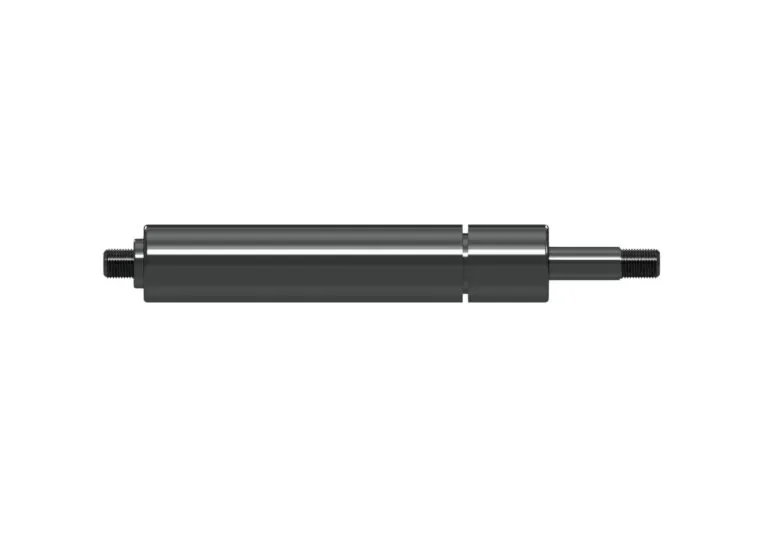
When most people think about gas springs, they picture the standard type that pushes outward to support the opening of a lid, hatch, or cover. But not every application works in push direction. In some systems, the movement needs to be controlled in the opposite way. That is where traction gas springs come in.
Also known in many cases as tension gas springs, these
products are designed to apply force in pull direction rather than push direction. This makes them suitable for vehicle systems where inward pulling force, controlled return movement, or compact tension-based support is required.
For vehicle manufacturers, equipment designers, and engineers, choosing the right gas traction spring can improve both function and integration. In the right application, it can help create more controlled movement, better packaging, and more reliable performance over time.
What are traction gas springs?
A traction gas spring is a gas spring designed to work in tension rather than compression. Instead of extending outward to push a moving part open, it generates force by pulling inward.
This is the main difference between a traction gas spring and a standard gas spring. A conventional gas spring supports movement in push direction, while a tension gas spring is built for applications that need force in the opposite direction.
Although the terminology can vary, traction gas springs and tension gas springs
usually refer to the same basic product concept.
Why are they called tension gas springs?
The term tension gas springs is used because the product works under tension. In practical terms, that means the gas spring is applying force while pulling rather than pushing.
Some manufacturers prefer the term traction gas springs because it sounds more product-specific and technical. Others use tension gas springs because it is more immediately understandable. In most cases, both names describe the same type of gas spring.
That is why buyers may see both terms used in catalogs, technical discussions, and product searches.
How do traction gas springs work?
The working principle is similar to other gas springs in the sense that internal gas pressure is used to create force. The difference lies in the way the product is designed to apply that force.
A gas traction spring is configured so that it supports inward pulling movement. This allows it to assist return motion, help maintain tension in a mechanism, or support compact system movement where a push-type gas spring would not be suitable.
In vehicle-related applications, this can be especially useful when packaging space is tight or when the moving component needs to be pulled into position rather than pushed away from it.
How do traction gas springs improve vehicle performance?
The word “performance” in vehicle systems does not always mean speed or power. In many cases, it refers to usability, efficiency, movement quality, packaging, and long-term functional reliability.
This is where traction gas springs can make a difference.
1. They help control movement more effectively
In vehicle systems, controlled motion is important. A poorly supported moving part can feel unstable, heavy, or awkward during operation. A traction gas spring can help guide movement in a more controlled and predictable way.
2. They support compact design solutions
Vehicle layouts often involve tight installation spaces. A gas traction spring can be useful where the movement logic or available geometry makes a standard gas spring difficult to use. This helps engineers work more efficiently within packaging limits.
3. They improve user experience
A moving panel, cover, or mechanism that behaves smoothly usually creates a better overall impression of the vehicle or equipment. In many applications, the right gas spring improves not only function, but also the feel of the movement.
4. They reduce strain on related components
When a gas spring is properly matched to the application, it can reduce unnecessary stress on hinges, mounting points, and surrounding hardware. Over time, this can contribute to more stable operation and improved durability.
5. They support more suitable movement direction
The biggest advantage of tension gas springs is simple: they make sense in applications where a pull-direction solution is needed. Instead of forcing a push-type product into the wrong geometry, the correct spring type can be used from the start.
Where are traction gas springs used in vehicle applications?
Traction gas springs can be used in a range of vehicle-related systems, depending on the design and movement requirement.
Possible application areas include:
- access mechanisms
- interior compartments
- panel return systems
- special cover arrangements
- seating-related movements
- utility vehicle equipment
- technical enclosures
- custom mechanical linkages
In each case, the actual suitability depends on the motion path, force requirement, installation geometry, and service conditions.
Traction gas springs vs standard gas springs
This is one of the most important points for anyone comparing options.
A standard gas spring works in push direction. It is typically used to lift, open, or support a moving part by extending outward.
A traction gas spring, by contrast, works in pull direction. It is chosen when the application needs inward force instead.
In simple terms:
- standard gas spring = push type
- traction gas spring = pull type
The choice between them depends entirely on how the movement needs to behave in the real application.
What should be considered when selecting a gas traction spring?
As with any gas spring, the correct choice depends on more than just nominal force.
Key factors include:
- required traction force
- stroke
- installed length
- end fittings
- mounting geometry
- movement direction
- cycle frequency
- environmental conditions
- material requirements
In vehicle applications, packaging and motion feel can be just as important as force values. That is why real application review matters.
Why terminology matters
The market uses several names for this product type, including traction gas springs, tension gas springs, and sometimes gas traction spring as a singular search phrase.
For buyers, this can create confusion at first. But in most technical contexts, these terms are pointing to the same basic category: a gas spring designed to work in pull direction.
Understanding that makes it easier to compare products and identify the right solution more confidently.
Conclusion
Traction gas springs are designed for applications where force is needed in pull direction rather than push direction. Also referred to as tension gas springs, they offer a practical solution for vehicle systems that require controlled inward movement, compact packaging, and more suitable tension-based support.
In vehicle applications, the right gas traction spring can improve movement quality, user experience, and overall system integration. Like any motion-control component, the real benefit comes from matching the product correctly to the application.
Need help selecting the right traction gas spring?
If you are evaluating traction gas springs or tension gas springs for a vehicle or equipment project,
contact us now, and our team can help you review the most suitable configuration based on your application requirements.