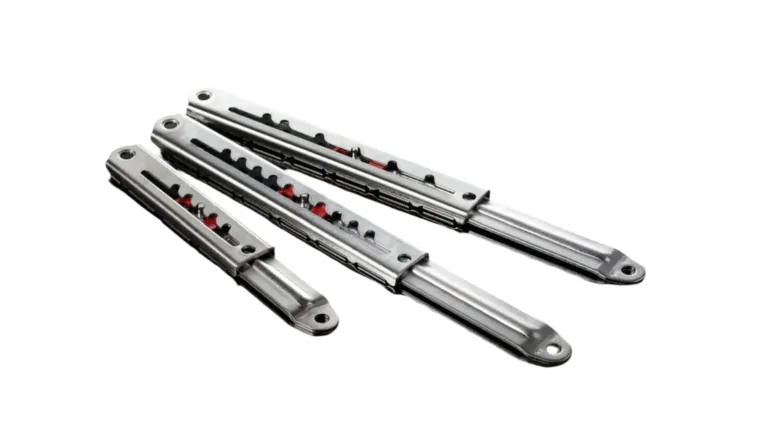
What are telescopic stays?
Telescopic stays are support components designed to extend and hold a moving part, usually in a controlled open position. They are commonly used where a lid, flap, door, panel, or cover needs support during opening and while remaining open. Unlike more basic support arms, telescopic stays typically use a sliding or staged structure that allows compact installation with practical extension. Depending on the design, they may be used on furniture, enclosures, vehicle compartments, access panels, industrial equipment, and many other products where supported opening is needed. Their role is simple in principle, but their selection can have a major effect on usability and safety.Why choosing the right telescopic stay matters
A telescopic stay is often expected to do several things at once. It should open smoothly, support the load reliably, fit the available space, and feel right in use. If the stay is not chosen correctly, the result may be:- unstable support
- poor opening angle
- difficult installation
- unnecessary stress on hinges or mounting points
- limited access to the opening area
- movement that feels awkward or unsafe
Start with the application, not the part number
One of the most common mistakes in product selection is looking at the stay first and the application second. In reality, the process should begin with questions like these:- What is the moving part?
- How much does it weigh?
- How far does it need to open?
- How much installation space is available?
- Will the product be used indoors or outdoors?
- Does the user need partial opening or full access?
- Is the stay mainly for support, positioning, or controlled movement?
Key factors to consider when choosing telescopic stays
Load and weight distribution
The total weight of the moving part matters, but so does how that weight is distributed. A panel with an uneven center of gravity may behave differently from one with the same total weight but a more balanced layout. This affects how much support the telescopic stay needs to provide and where it should be mounted.Required opening angle
Not every application needs the same opening angle. Some panels only need limited access, while others must open fully for service, storage, or operator use. The stay should support the intended opening range without creating interference or reducing usability.Closed and extended length
A telescopic stay must fit when the product is closed, but it must also extend enough when the product is open. That balance is one of the most important parts of selection. If the stay is too long when closed, installation becomes difficult. If it is too short when extended, the opening angle may be limited.Mounting points and geometry
The same telescopic stay can perform very differently depending on where it is mounted. Position changes can affect leverage, stability, and how the moving part feels during operation. That is why mounting geometry should always be reviewed together with stroke and overall length.Material suitability
The operating environment matters. In indoor furniture or dry technical enclosures, one material option may be enough. In outdoor, humid, or more demanding conditions, corrosion resistance may become more important. Material choice should always reflect the real environment of the application.Frequency of use
A stay used occasionally in a light-duty product may not need the same performance level as one used repeatedly in industrial or daily-use equipment. Expected cycle frequency should be part of the review.Where telescopic stays are commonly used
Telescopic stays are used in many types of products where supported opening is required. Common examples include:- furniture lids and compartments
- industrial access covers
- machine guards and panels
- storage compartments
- vehicle applications
- service hatches
- technical enclosures
- box lids and cover systems
Telescopic stays and user experience
Selection is not only about technical fit. It is also about how the product feels in use. A well-chosen telescopic stay can make a panel feel stable, easy to open, and secure in the open position. A poor choice can create a product that feels awkward, heavy, or less safe. That is why telescopic stays are often more important than they first appear. They are small components, but they influence the way a product is experienced every day.Standard vs custom telescopic stays
In some applications, a standard telescopic stay may be perfectly suitable. In others, the design may require a more specific solution. Custom telescopic stays may be considered when the project involves:- unusual dimensions
- limited installation space
- specific opening angles
- higher load requirements
- special end fittings
- environmental demands
- product-specific mounting conditions
What should you check before making a final decision?
Before finalizing the selection, it is worth reviewing a few points together:- actual panel weight
- center of gravity
- target opening angle
- closed and open dimensions
- mounting locations
- surrounding clearance
- required material option
- expected frequency of use
- safety and handling expectations