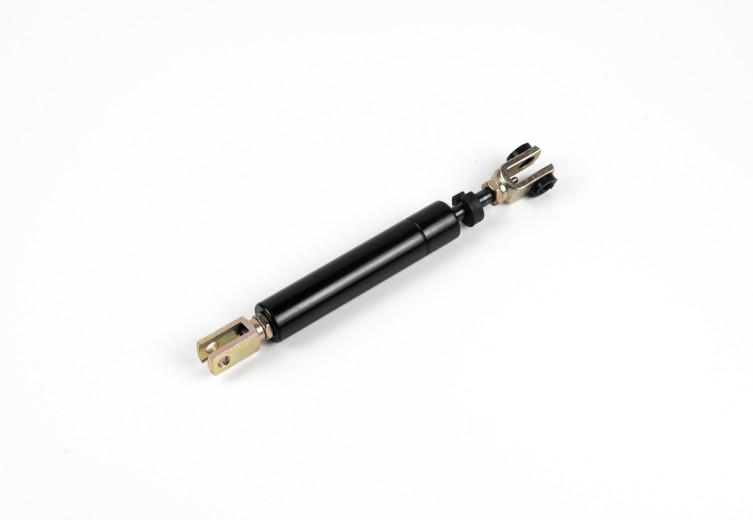
Lockable Gas Traction Springs: How They Work and Where They Are Used
In some applications, a standard traction gas spring is not enough. The movement may need to be supported, but it may also need to be stopped and held securely at a chosen position. That is where lockable gas traction springs become especially useful.
Unlike a conventional traction gas spring, a lockable version allows controlled movement and holding function in the same product. This makes it a practical solution for applications where positioning, safety, and ease of adjustment are all important at the same time.
For engineers and equipment manufacturers, this type of spring can be a valuable option when the application requires both pulling force and locking capability across the stroke.
What is a lockable gas traction spring?
A lockable gas traction spring is a gas spring that works in traction while also allowing the rod position to be held when needed. In other words, it is designed to pull rather than push, while also offering a locking function during movement.
These springs are continuously adjustable over the full stroke. When the release mechanism is activated, the internal valve opens and allows the medium inside the spring to flow in a controlled way. This enables the piston rod to move and the spring to adjust position. Once the release is no longer activated, the spring can hold its position again.
This combination of traction force and locking function makes the product suitable for equipment that needs controlled positioning rather than simple return movement alone.
How does the locking function work?
The operating principle is based on a release pin. When this pin is pressed, the internal valve opens. Once open, gas or oil can pass through the piston system, allowing the piston rod to move.
This movement is controlled rather than free. The release travel can be very short, with release possible in less than 1 mm (0.04 in). That helps provide precise response, especially in applications where fine control is important.
When the release is no longer engaged, the locking function comes back into effect and the spring can hold the selected position. This is one of the reasons lockable gas traction springs are often used where reliable adjustment and positioning matter in daily operation.
Why lockable gas traction springs are preferred in certain applications
In real applications, movement alone is not always enough. Many systems also need a stable holding function so the component can stay where the user places it.
A lockable gas traction spring can help provide:
- adjustable positioning over the full stroke
- controlled traction movement
- reliable holding in the selected position
- smooth release function
- precise user control
- compact integration into technical equipment
This makes the product especially relevant in systems where comfort, positioning accuracy, or operator handling are important.
A common choice for medical equipment
Due to their high reliability and controlled operation, lockable gas traction springs are often preferred in medical equipment. In medical applications, movement usually needs to be smooth, stable, and easy to control. The ability to release the spring, adjust position, and then hold it securely can be a major advantage in this type of environment.
This does not mean they are limited to medical use. They can also be used in other technical systems where controlled traction and locking are needed. Still, medical equipment remains one of the most relevant application areas because the requirements for reliability and positioning are typically higher than in many general-purpose systems.
Force range and technical capability
Lockable gas traction springs are available in a wide range of force levels, depending on the piston rod and cylinder dimensions.
The pull-in force can range from 100 N (22.5 lbs) up to 4000 N (899.2 lbs). This allows the spring to be used in both lighter and more demanding applications, depending on the required traction force.
In terms of locking performance, the locking force in both push and pull directions can reach up to 7000 N (1573.6 lbs). This is one of the key reasons these products are used in equipment where holding stability is just as important as movement itself.
Stroke range and size options
Another advantage of lockable gas traction springs is their flexibility in stroke length.
Stroke options can range from 10 mm (0.39 in) to 550 mm (21.65 in), making them suitable for both compact assemblies and applications requiring longer travel.
Available piston rod and cylinder diameter combinations include:
- 8 / 22 mm (0.31 / 0.87 in)
- 10 / 28 mm (0.39 / 1.10 in)
- 14 / 40 mm (0.55 / 1.57 in)
These combinations allow different force levels and design configurations to be matched more appropriately to the application.
Speed and damping options
Not every application requires the same movement behavior. In some cases, a faster response is preferred. In others, slower and more controlled motion may be more suitable.
For that reason, lockable gas traction springs can be produced with different movement characteristics, including:
- normal
- fast
- slow
This flexibility helps the spring match the overall feel and performance expectations of the final product.
Connection options matter too
In many applications, the correct connection detail is just as important as the spring itself. The end connection affects installation, alignment, and the overall behavior of the system.
For lockable gas traction springs, piston rod thread options may include:
- MF10x1x18 for Ø10 mm (0.39 in) piston rods
- MF14x1.5×20 for Ø14 mm (0.55 in) piston rods
Selecting the right end fitting or connection part is part of making sure the spring works properly in the final assembly. A technically correct spring may still be difficult to use if the connection geometry is not suitable for the product design.
What should be considered before selecting a lockable gas traction spring?
As with other gas spring types, product selection should be based on the full application rather than on force value alone.
Important factors include:
- required pull-in force
- stroke length
- locking force requirement
- installation space
- piston rod and cylinder diameter
- release method
- preferred movement speed
- connection thread or end fitting type
- the overall function of the equipment
This becomes even more important in applications where user control and positional stability are part of the product’s daily use.
Why this product is different from a standard traction gas spring
A standard traction gas spring provides pulling force, but it does not normally offer the same kind of controlled holding function. A lockable gas traction spring adds another level of functionality by allowing the user to release, position, and hold the moving element as needed.
That makes it more suitable for applications where variable positioning is required rather than only open-and-close movement.
In that sense, the value of this product is not only in the traction force itself, but in the extra control it gives to the application.
Conclusion
A lockable gas traction spring is a practical solution for systems that require both traction force and reliable positional locking. With continuous adjustability over the full stroke, short release travel, and strong locking capability in both directions, it supports a more controlled and functional movement system.
With pull-in forces from 100 N (22.5 lbs) to 4000 N (899.2 lbs), locking force up to 7000 N (1573.6 lbs), stroke options from 10 mm (0.39 in) to 550 mm (21.65 in), and multiple diameter combinations, this type of spring can be adapted to a wide variety of technical applications.
It is especially well suited to equipment where reliability, smooth adjustment, and stable positioning matter, particularly in medical and other precision-focused systems.
Need help selecting the right lockable gas traction spring?
If your project requires controlled traction movement, reliable locking, and suitable connection options, our team can help you evaluate the most appropriate configuration for your application.