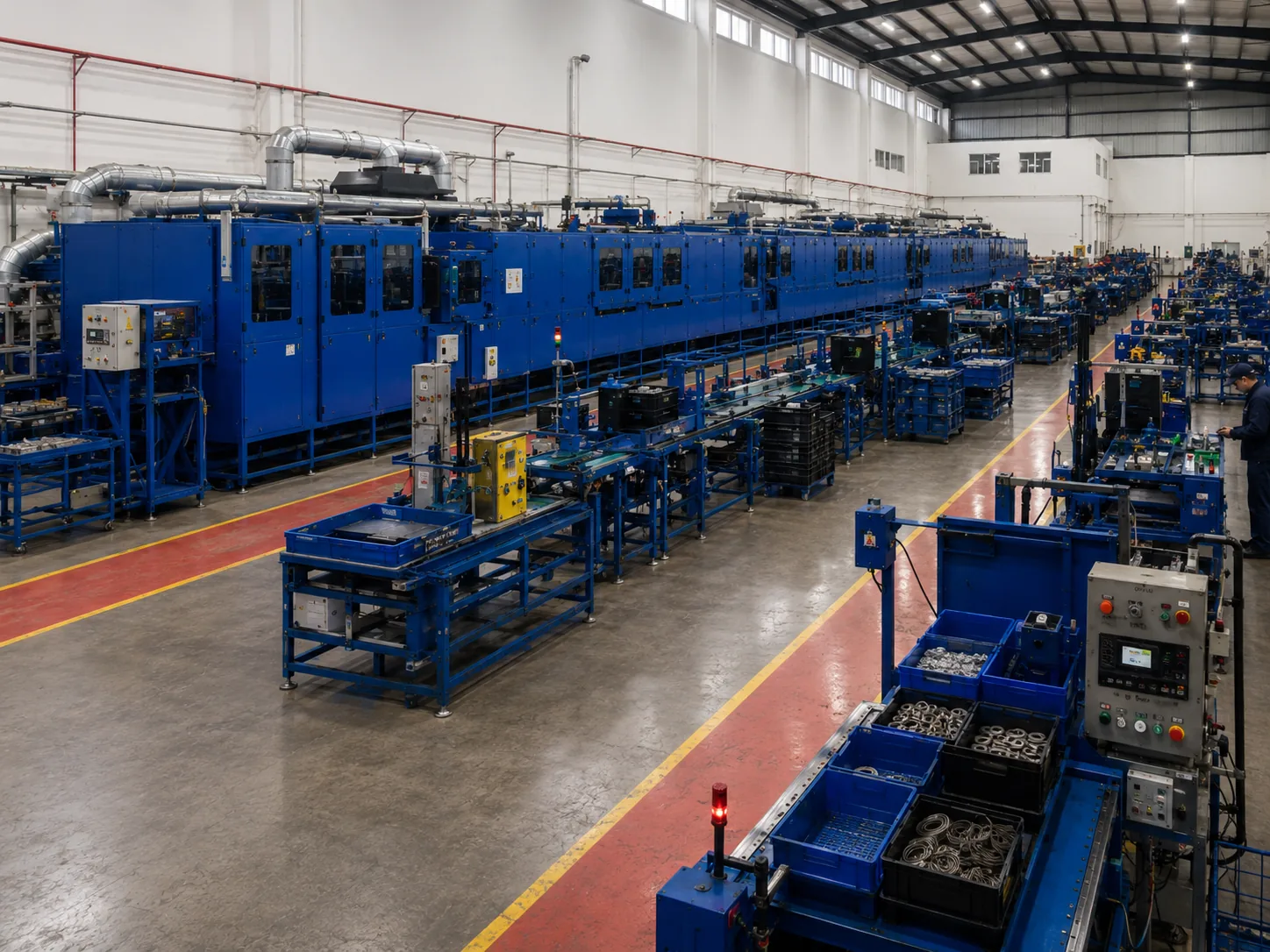
Gas spring manufacturing at Newtone takes place at our production facility in Istanbul, Türkiye, where we produce gas springs, dampers and other motion control products.
Our factory covers approximately 4,500 m² and operates with a team of around 160 people. Annual production capacity exceeds 7 million units, allowing us to support both high-volume OEM programs and highly specific custom projects.
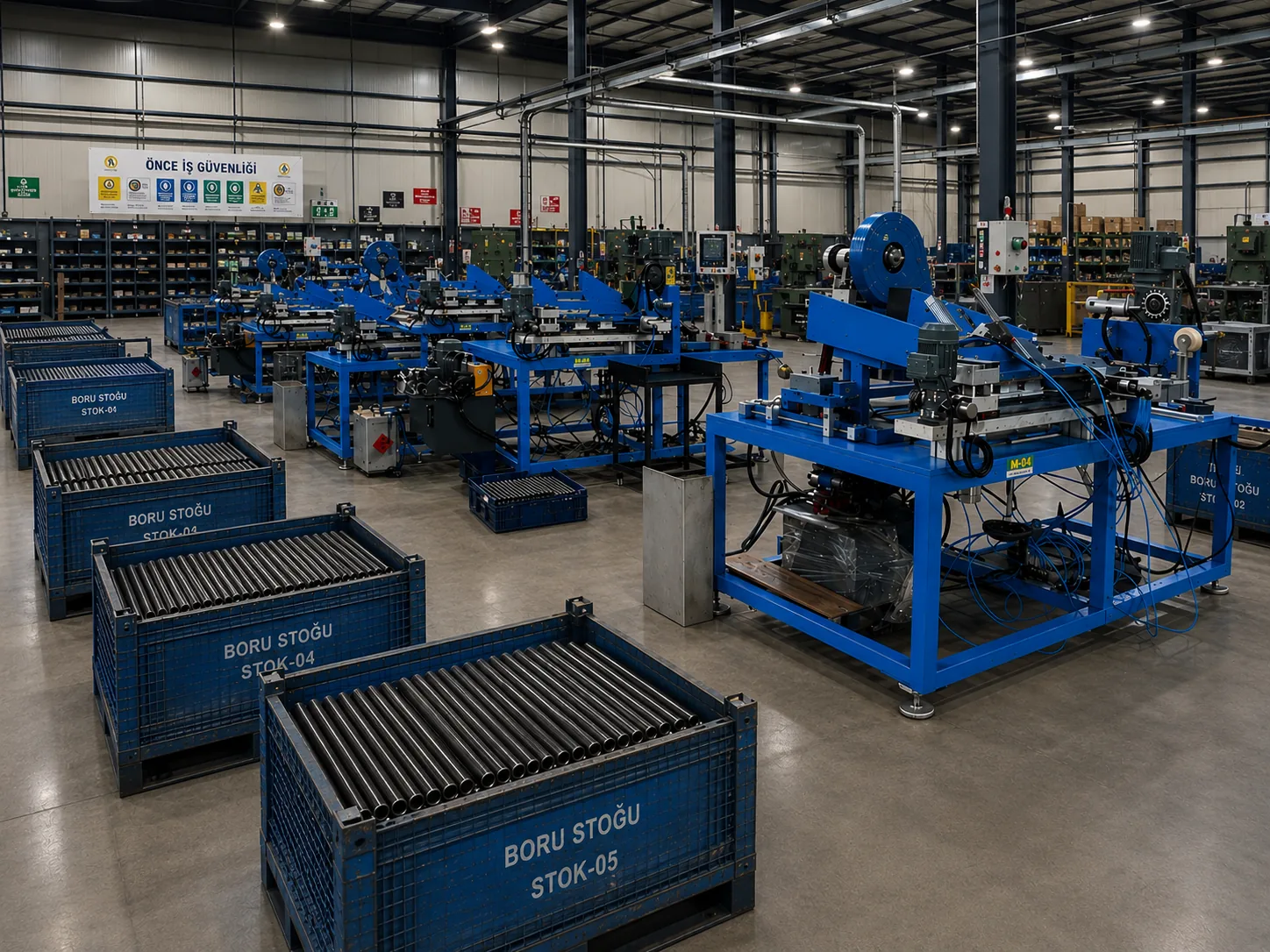
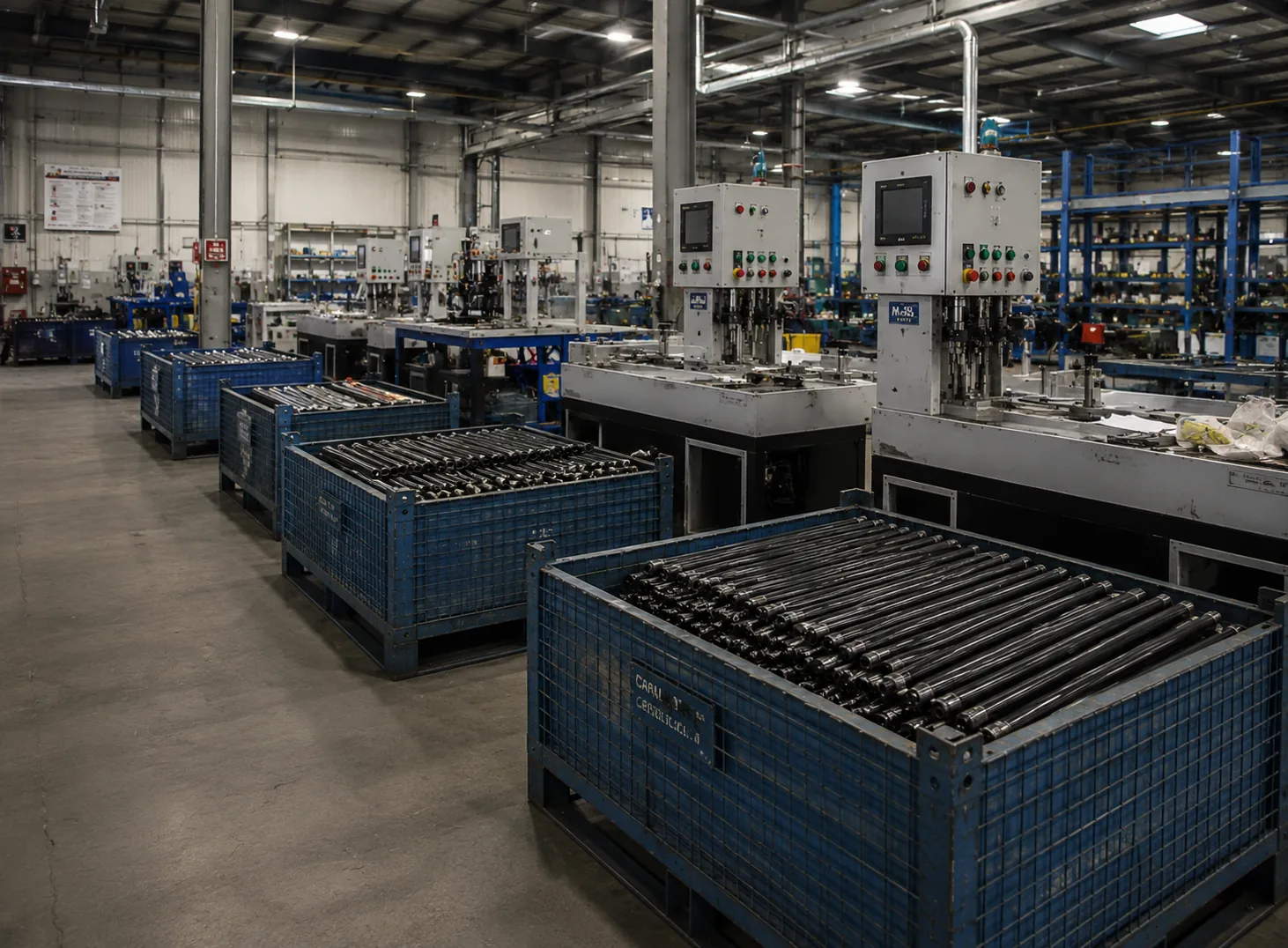
A large part of the manufacturing process is kept under our own control. Steel tubes and piston rods enter the factory as raw materials and pass through cutting, machining, surface processing, welding, assembly, oil filling, nitrogen gas filling, force control, painting, marking and other production stages before becoming finished products. Approximately 90% of our manufacturing activities are handled within Newtone. External purchasing is mainly limited to raw materials, selected components, chemicals, packaging materials and other specialized requirements.
This gives us an important combination of capacity and flexibility. We can manufacture millions of gas springs every year, but if a customer needs only three specially designed units for a new application, we can manufacture those too. For us, custom manufacturing is not defined by order quantity.
Manufacturing at a Glance
| Capability | Newtone |
|---|---|
| Production location | Istanbul, Türkiye |
| Manufacturing facility | Approximately 4,500 m² |
| Team | Approximately 160 people |
| Annual production capacity | More than 7 million units |
| Manufacturing handled in-house | Approximately 90% |
| Gas spring force range | Approximately 20 N to 7,500 N |
| Stroke capability | Up to 1,200 mm |
| Stainless steel options | 304 and 316L |
| Manufacturing model | Custom projects and serial OEM production |
| Production structure | Highly automated |
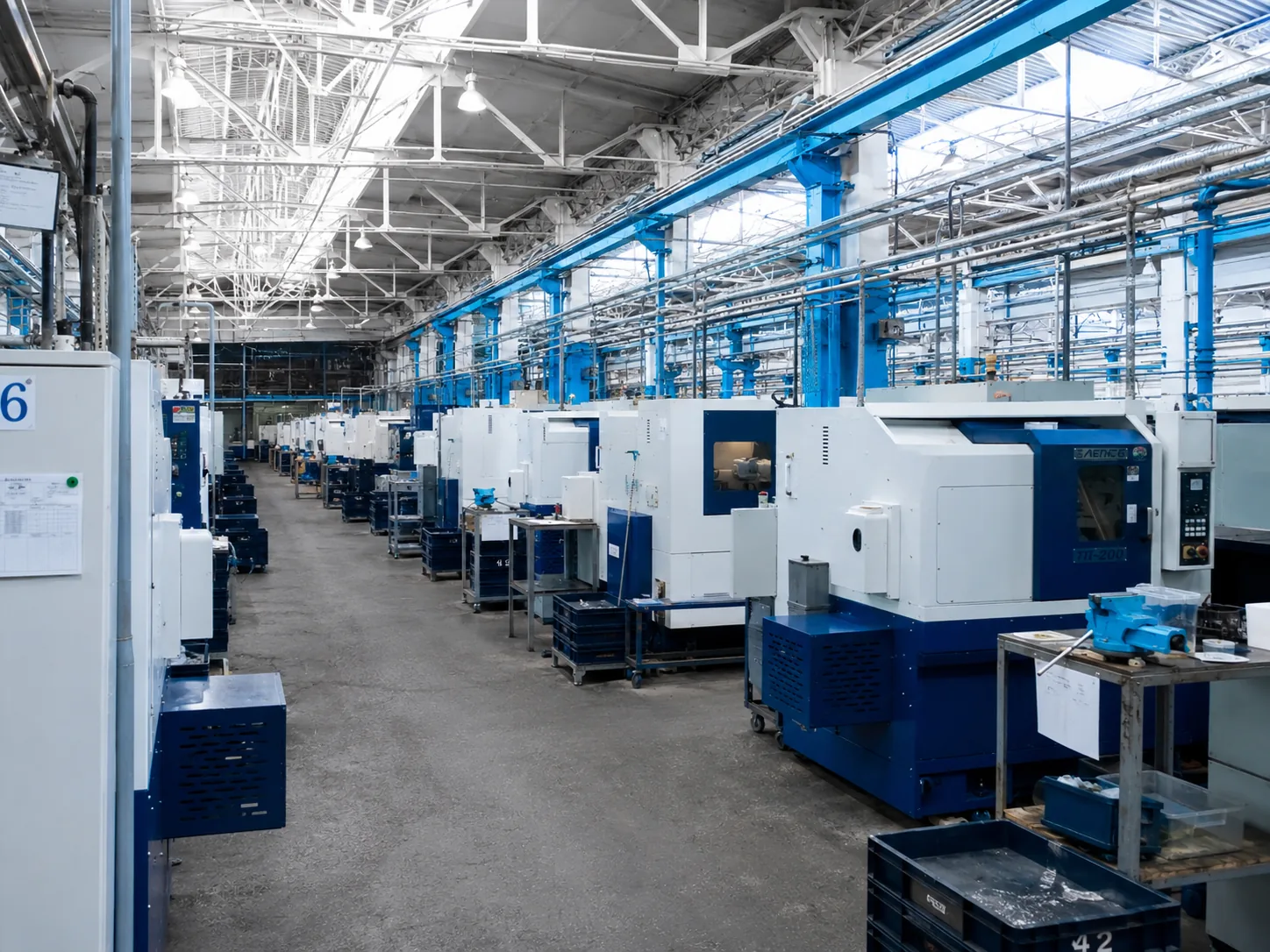
| CNC machining | 18 CNC machines |
| Traceability | Lot-based production records |
Inside the Newtone Manufacturing Facility
Our company introduction video gives customers a direct look inside the Newtone factory. It shows our production environment, machinery, tube and piston rod processing, assembly, gas filling, testing, painting and several other operations used during manufacturing.
For customers evaluating a new supplier, seeing how the products are actually manufactured can be more useful than reading a long list of capabilities. The video provides a practical view of the factory, equipment and processes behind our products.
Want to see the factory in operation?
From Raw Material to Finished Gas Spring
A gas spring may look relatively simple from the outside, but its performance depends on many details created during manufacturing. Piston rod surface condition, tube dimensions, internal components, sealing elements, oil characteristics, gas pressure, welding quality, dimensional tolerances and assembly conditions can all affect how the product performs during its working life.
This is why we prefer to control the process from the beginning rather than depend mainly on inspection after the product has already been completed. Our manufacturing process includes tube preparation, piston rod processing, CNC machining, threading, grinding, swaging, welding, component preparation, assembly, oil filling, nitrogen gas filling, force verification, washing, painting, marking and final product preparation.
Most of our core production equipment is automated. Many systems use automatic feeding and unloading, particularly in tube processing, piston rod operations and other repetitive production stages. Automation is valuable because the same operation may need to be repeated thousands of times without losing control of dimensions or process conditions.
The goal is not simply to automate more machines. The goal is repeatability.
In-House Machining and Component Production
Machining capability becomes especially important when a customer needs something outside a standard product configuration. Our facility includes 18 CNC machines together with lathes, milling machines, hydraulic presses and dedicated equipment for tube, piston rod and gas spring component processing.
Keeping this capability inside our own factory gives our engineering and production teams more freedom when developing a new product. A project may require an unusual dimension, different mounting detail, special piston rod, different rod and tube combination or a component that cannot simply be selected from a catalogue.
In many cases, these parts can be developed and manufactured within Newtone. This is an important part of what being a custom gas spring manufacturer means to us.
Gas Springs and Motion Control Products We Manufacture
Our manufacturing capability covers standard gas springs together with products developed for specific applications.
| Product Group | Manufacturing |
|---|---|
| Standard Gas Springs / Gas Struts / Gas Shocks | ✓ |
| Compression Gas Springs | ✓ |
| Stainless Steel Gas Springs | ✓ |
| Locking / Lockable Gas Springs | ✓ |
| Traction / Tension Gas Springs | ✓ |
| Force Adjustable Gas Springs | ✓ |
| Non-Magnetic Gas Springs | ✓ |
| Dual-Action Gas Springs | ✓ |
| Double Stroke Gas Springs | ✓ |
| Telescopic Gas Springs | ✓ |
| Click&Go Gas Springs | ✓ |
| Hydraulic Dampers | ✓ |
| Mechanical Traction Struts | ✓ |
| Mechanical Compression Struts | ✓ |
| Locking Safety Tubes / Safety Shrouds | ✓ |
| Gas Spring End Fittings | ✓ |
| Mounting Brackets | ✓ |
The purpose of having this range is not simply to create a larger catalogue. Different applications require different forces, dimensions, movement characteristics, materials, mounting arrangements and operating behaviour.
Sometimes one of our existing products is exactly what the customer needs. Sometimes it is only the starting point for a new design.
Custom Gas Springs Built Around the Application
We regularly manufacture gas springs around the application rather than asking the application to adapt to a fixed catalogue product. Force, stroke, extended length, compressed length, rod and tube diameter, end fittings, material, mounting configuration, damping characteristics, surface finish, colour and other product details can be evaluated according to the project.
Our manufacturing capability includes many rod and tube combinations, including 4/12, 6/15, 8/18, 8/22, 8/28, 10/21, 10/22, 10/27, 10/28, 10/40, 14/27, 14/28, 14/40, 20/40, 22/40 and 25/55 mm. Other configurations can also be evaluated where the application requires them.
Our approximate force range extends from 20 N to 7,500 N. Stroke and overall dimensions are determined according to the project. For applications requiring unusually long movement, we can manufacture gas springs with stroke lengths of up to 1,200 mm.
This enables us to develop large and special-purpose gas springs that fall well outside the dimensions normally associated with standard catalogue products.
Materials for Different Operating Environments
Material selection depends on where and how the gas spring will operate. Our manufacturing uses carbon steel, stainless steel, aluminium, brass and engineering steels including C35 and C45 for appropriate piston rod and component applications.
For stainless steel gas springs, 304 and 316L stainless steel options are available depending on the environmental and technical requirements of the project. We also manufacture non-magnetic gas springs for applications where conventional material combinations are not suitable.
Material selection is considered together with corrosion exposure, operating environment, loading conditions, movement frequency, mounting position and expected service conditions. A material should not be selected simply because it is available. It should make sense for the application.
Force Adjustable Gas Springs
Not every application begins with a perfectly known force requirement. For projects where the optimum force needs to be established during installation, testing or commissioning, we can manufacture force adjustable gas springs.
These products allow the operating force to be adjusted according to the actual behaviour of the application. They can be particularly useful during prototype development, equipment commissioning or projects where a calculated force needs to be confirmed under real operating conditions.
Custom Manufacturing Does Not Mean High Volume Only
Custom manufacturing is often associated with large OEM contracts. That is not how we define it. A customer may be developing a prototype, modifying an existing machine, replacing a discontinued component or designing a mechanism that has never been produced before.
Sometimes that project needs thousands of gas springs. Sometimes it needs three. If a customer requires only three specially configured gas springs, our engineering and production teams can still evaluate the application and manufacture them.
The number of pieces does not necessarily reflect the importance of the engineering problem. This allows us to work with customers during the early stages of development rather than waiting until a project reaches large production volumes.
If the project later moves into serial production, the same manufacturing organization can support recurring OEM quantities. That ability to move between low-volume custom work and high-volume manufacturing is an important part of our production model.
From a New Requirement to Serial OEM Production
A new project usually starts with understanding the application. Some customers send us a complete technical drawing. Others send an existing gas spring, dimensions, photographs, application information or simply explain what they need the mechanism to do.
Our engineering team reviews the available information and determines which parameters still need to be defined. A technical drawing or product configuration is then prepared and the proposed solution is evaluated according to the project requirements.
Samples are manufactured for customer testing and approval. Whenever possible, we prefer to provide at least two sample units because testing more than one unit gives the customer a better basis for evaluating product behaviour. Sample quantities and lead times depend on the complexity of the project.
If changes are required after application testing, the product can be revised before the final specification is released. Once the customer approves the product, it can move into serial production.
Custom gas spring development is therefore not always a simple process of receiving a drawing and manufacturing a part. In many projects, it is an engineering process between the customer’s application and our team.
Automated Gas Filling and Force Verification
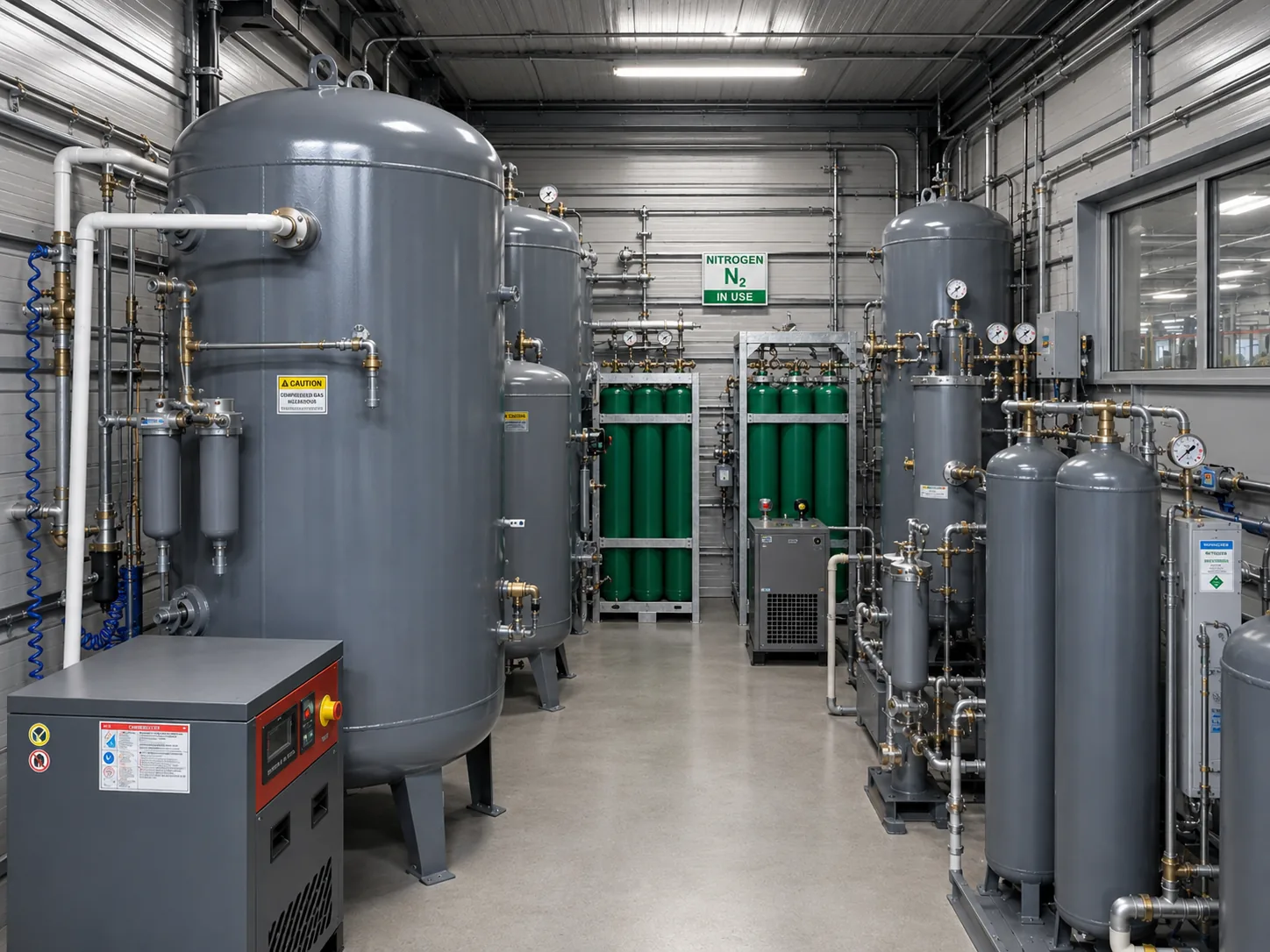
Force consistency is one of the most important functional characteristics of a gas spring. At Newtone, force verification is integrated directly into the gas filling process.
Our gas filling equipment measures the product while filling takes place. If the measured force falls outside the defined tolerance range, the system identifies the product as non-conforming and it does not proceed to the packaging area. Products moving forward from the gas filling stage have therefore already been checked against the required force tolerance.
Before packaging, additional force measurements are also carried out at defined intervals on products that have already passed this control. These measurements provide a second confirmation that the gas filling process continues to operate within the expected parameters.
The first control takes place during filling. The second confirms the stability of the production process before shipment. Force-related complaints on products supplied to our customers are very uncommon, and maintaining that consistency is one of the reasons we build force verification into manufacturing rather than treating it only as a final inspection.
Quality Starts With Incoming Material
Quality does not begin at the final inspection table. It begins when material enters the factory. Incoming material control is followed by checks throughout machining, component preparation, assembly, filling, finishing and final product preparation.
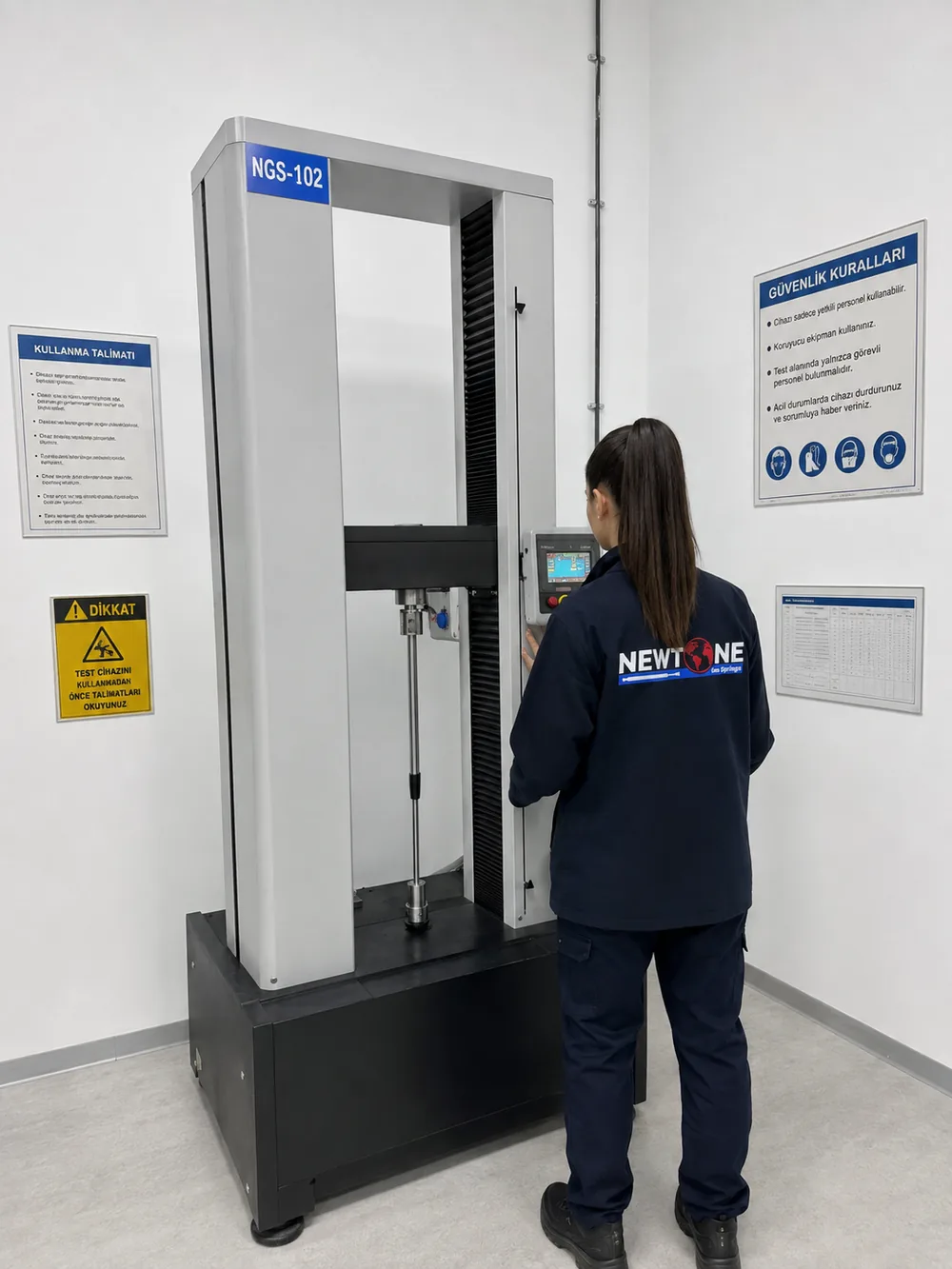
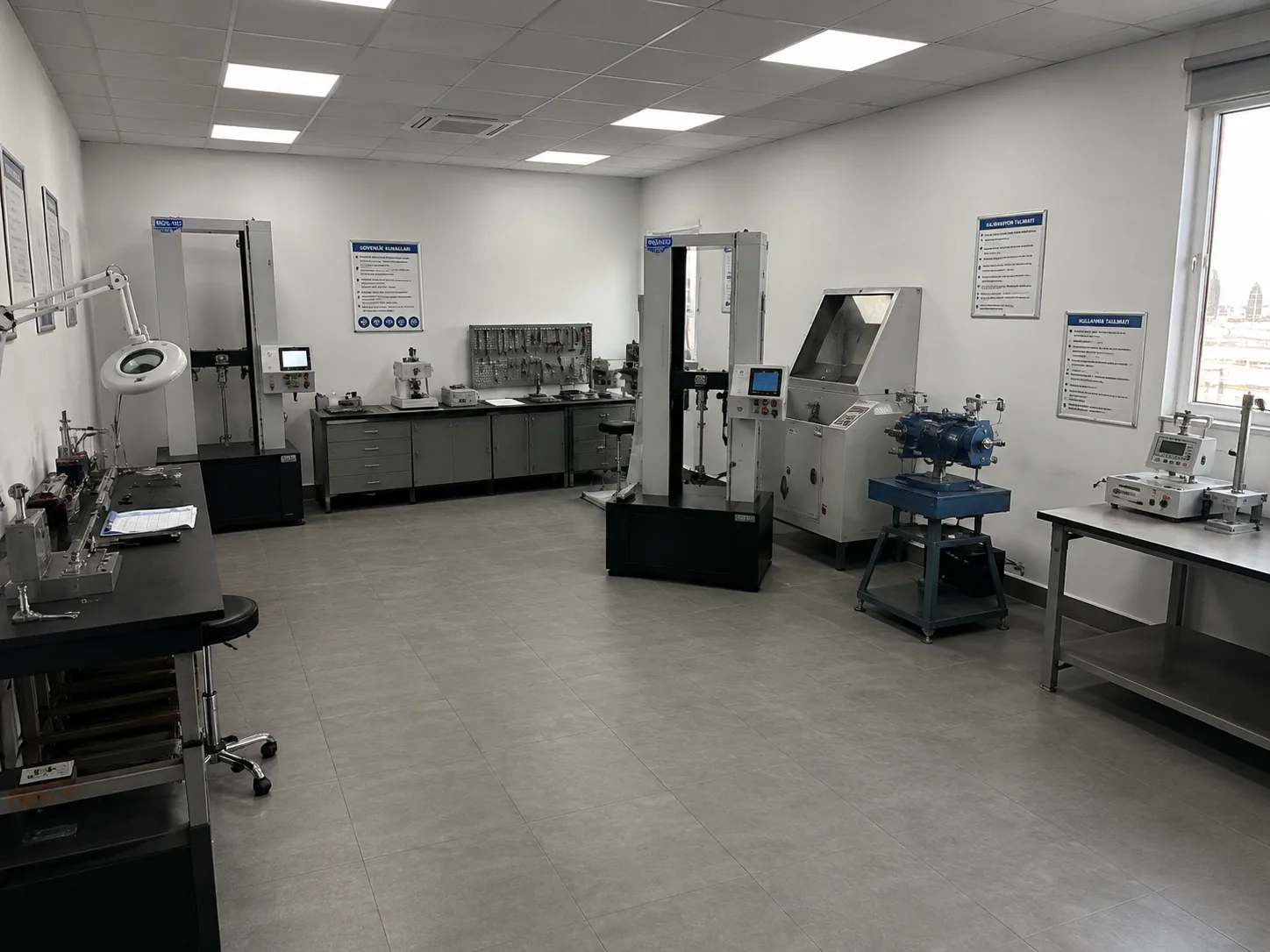
Depending on the product and project, our production and quality activities include dimensional measurement, material inspection, force testing, life cycle testing, salt spray corrosion testing, oil viscosity testing, surface and coating inspection, connection strength testing, pull-out testing, breakage testing and functional verification.
Our facility uses approximately 30 testing devices and systems across production and quality activities. These include force measurement systems, life cycle testing equipment, corrosion testing, coating thickness measurement, ultrasonic stereo microscopy, temperature measurement equipment and dedicated systems used to evaluate gas spring behaviour including F1, F2, F3, F4, friction and operating speed.
Testing is important, but preventing a non-conforming product from continuing through production is even more important. We believe quality has to be created during manufacturing rather than added after production has finished.
The same approach applies to details that may appear less technical. The finished gas spring must perform correctly, but the condition in which it reaches the customer matters too. We pay attention to product surfaces, protective packaging, labels, cartons, bags and even the tape used to close the box.
The tape does not determine whether the gas spring works. But attention to small details often says a great deal about how the rest of the product has been treated.
Traceability Throughout Production
Every manufactured product is associated with a production lot. The lot number is not used only for identification. When required, production information can be traced back to the components used for the relevant lot, the machines involved and the operators associated with manufacturing.
This is especially valuable in recurring OEM production, where the same product may be manufactured repeatedly over months or years. If a technical question needs to be investigated later, the production history provides a reference for reviewing what happened during a specific batch.
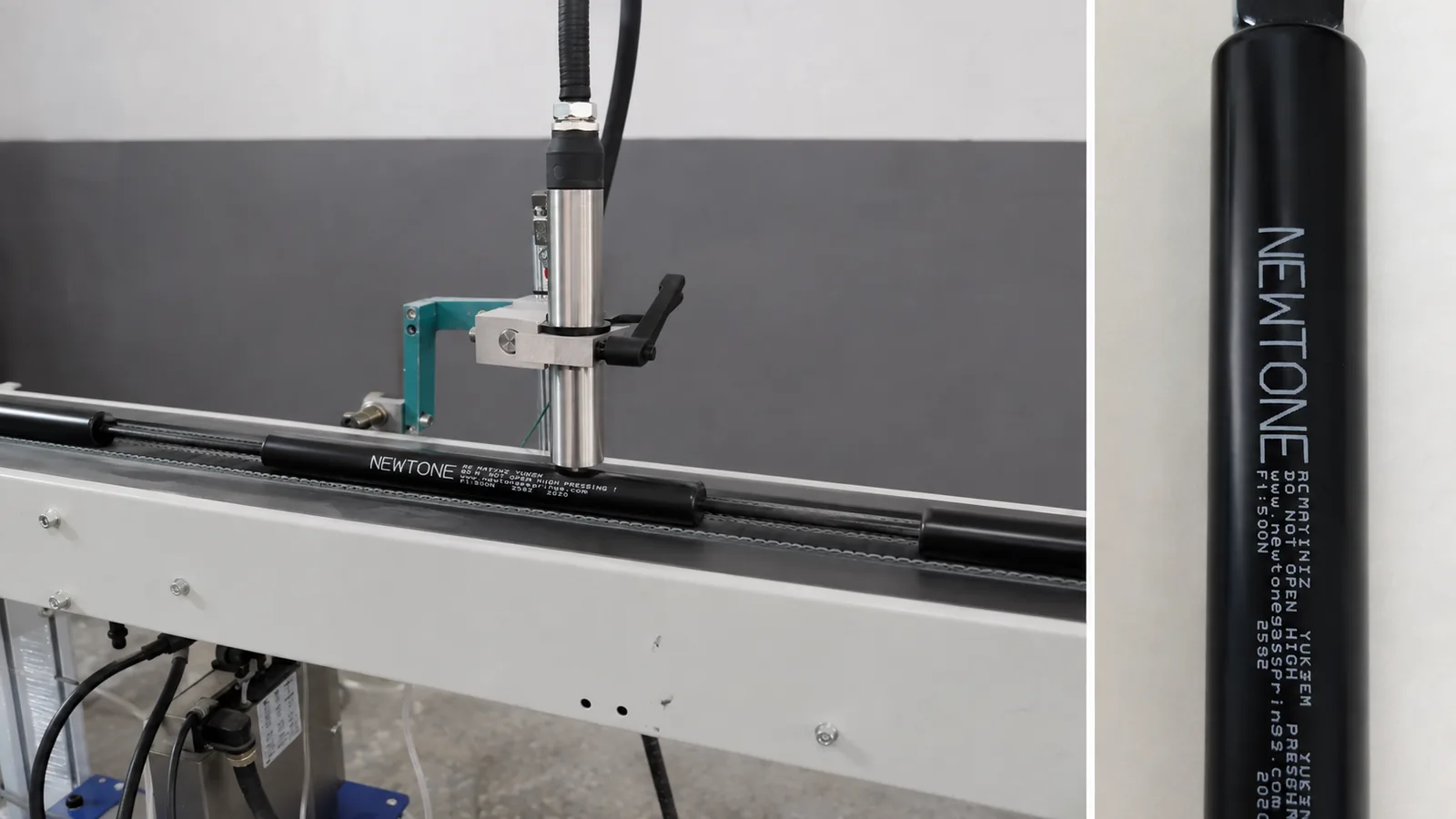
A Highly Automated Machine Park
Much of the core production equipment in our factory operates with automated processing, feeding or unloading systems. The machine park has been developed to support both repeatable serial production and the flexibility required for custom manufacturing.
| Manufacturing Equipment | Quantity |
|---|---|
| CNC machines | 18 |
| Automatic tube cutting systems | 2 |
| Automatic tube chamfering systems | 4 |
| Automatic tube end closing systems | 4 |
| Piston rod end processing systems | 4 |
| Two-head rod threading systems | 3 |
| Swaging machines | 4 |
| Automatic rod grinding systems | 4 |
| Horizontal welding machines | 2 |
| Vertical welding machines | 2 |
| Rod surface burnishing machines | 2 |
| Oil filling machines | 4 |
| Riveting machines | 3 |
| Horizontal two-head gas filling machines | 5 |
| Vertical gas and oil filling / end closing systems | 2 |
| Painting line and oven system | 1 |
| Testing devices and systems | Approximately 30 |
The facility also includes metal washing and drying systems, inkjet marking equipment, painting equipment and its own nitrogen generation system.
A machine list by itself does not make a good gas spring. What matters is what the equipment allows us to control. For us, that means being able to move from engineering and sample production into repeatable serial manufacturing without rebuilding the production chain for every new project.
Manufacturing for Different Industries
Gas springs can perform similar mechanical functions while operating in completely different environments. Our manufacturing experience includes projects for automotive and commercial vehicles, medical equipment, marine applications, defence, renewable energy, construction, furniture, industrial equipment, recreational vehicles, machinery and other specialized OEM applications.
A gas spring used in medical equipment cannot automatically be treated in the same way as one installed on a marine application or construction machine simply because the dimensions appear similar.
Force, stroke, movement frequency, corrosion exposure, temperature, installation orientation, mounting space, material requirements and expected operating life can all influence the final configuration. This is why understanding the application comes before defining the product.
Supporting OEM Customers Around the World
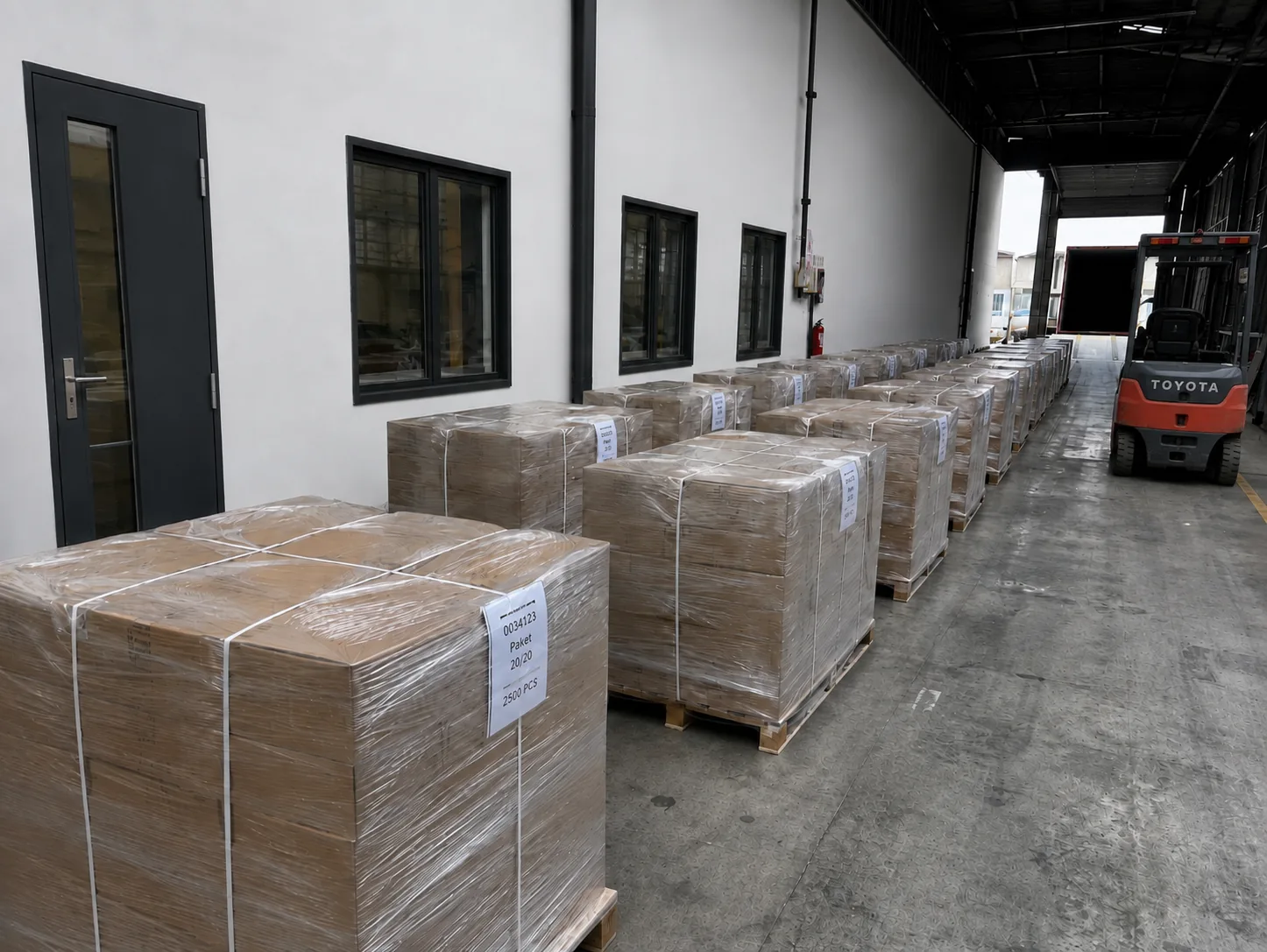
Newtone supplies customers across Europe, North America, South America, the Middle East, Asia-Pacific, Africa and other international markets. Our customer base includes companies in Germany, France, the United Kingdom, the United States, Canada, Australia, Brazil and many other countries.
Some projects begin with only a few custom products. Others develop into long-term serial production programs. Working internationally has also influenced how we think about production control.
When a component travels thousands of kilometres before reaching an OEM production line or customer warehouse, avoiding a preventable problem before shipment is far more practical than trying to solve it afterwards.
Manufacturing consistency, testing, traceability and packaging therefore belong to the same process.
How We Work With Customers
We do not decide how important a customer is based only on purchasing volume. A customer ordering three custom gas springs may be working on an important prototype, while another customer may require thousands of products every month. Both need the product to work correctly.
We prefer to build long-term manufacturing relationships rather than treat every project as an isolated purchase order. Sometimes that requires additional engineering work. Sometimes another sample needs to be produced. Sometimes an existing design needs to be reconsidered because the application behaves differently than expected.
Protecting the reliability of the product and the relationship with the customer matters more to us than looking only at the immediate value of one order. A project may begin with three custom pieces and later develop into recurring OEM production. Reputation is built one shipment at a time.
Management Systems, Standards and Product Compliance
Our management framework covers quality, customer satisfaction, environmental responsibility, risk management and occupational health and safety.
| Standard / Area | Scope |
|---|---|
| ISO 9001 | Quality Management System |
| ISO 10002 | Customer Satisfaction and Complaints Handling |
| ISO 14001 | Environmental Management System |
| ISO 31000 | Risk Management Guidelines |
| ISO 45001 | Occupational Health and Safety Management System |
| Product conformity | CE-related documentation where applicable |
Current certificates and product conformity documents are available from Newtone on request.
What Do We Need to Start a Gas Spring Project?
A complete technical drawing is useful, but it is not required before contacting us. A project can also begin with an existing gas spring, application photographs, dimensions or simply an explanation of what the mechanism needs to do.
Useful information includes:
- Required force
- Stroke
- Extended and compressed lengths
- Available mounting space
- End fitting requirements
- Material preference
- Operating orientation
- Working environment
- Expected quantity
- Technical drawings, photographs or existing product information if available
If some of these parameters are not yet known, our engineering team can help determine what needs to be defined before sample production.
Talk to Our Engineering Team
If you already have a technical drawing, send it to us. If you have an existing gas spring, application dimensions, photographs or only an explanation of what you are trying to achieve, that is enough to start a discussion.
Our engineering team can review the requirement, evaluate the appropriate product configuration and determine the next step toward sample or serial production.
Talk to Newtone Gas Springs about your standard, custom or OEM gas spring project.
Share a drawing, an existing sample or simply an explanation of your application, and our engineering team will help you determine the right next step.