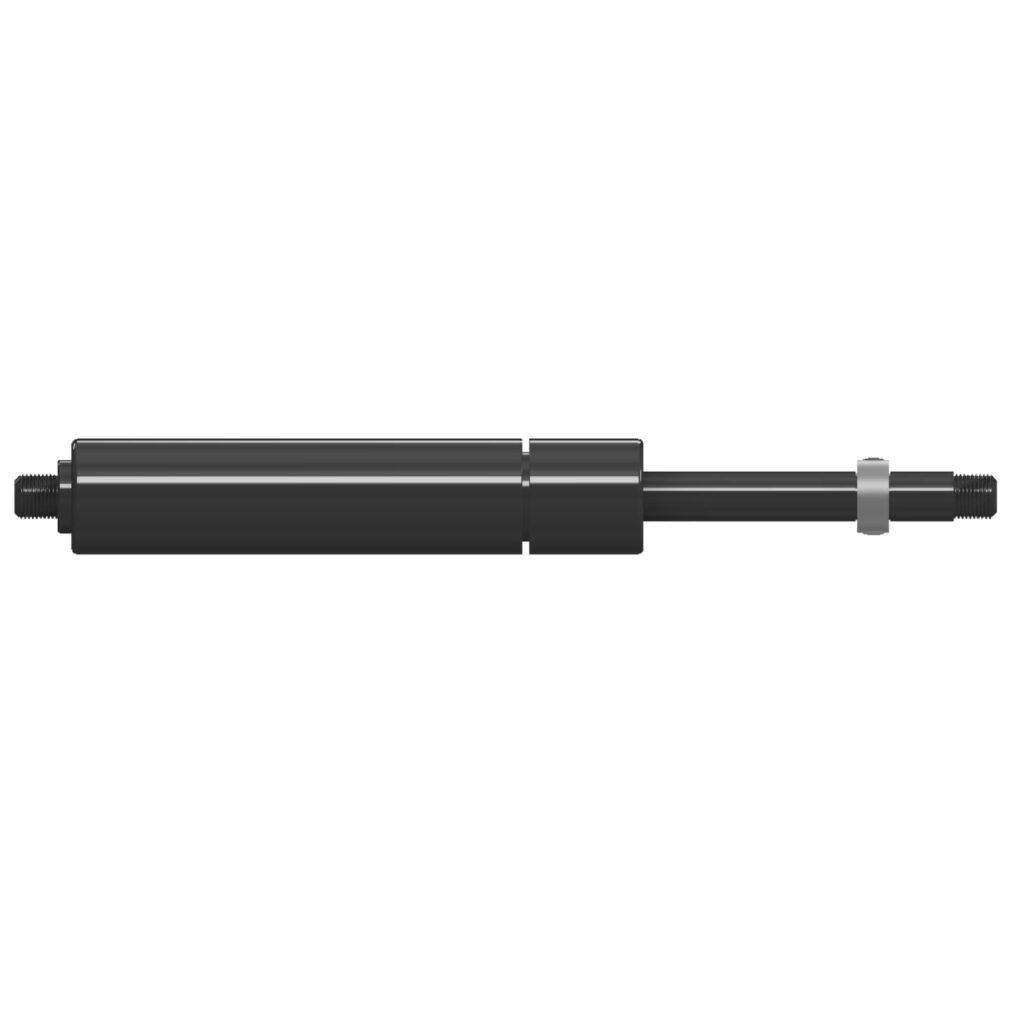
What are Click and Go Gas Springs?
Click and Go Gas Springs are gas spring solutions designed for applications where supported movement and easier positioning are important parts of the product’s function. Rather than being seen as a simple lift-assist component, they are often chosen where the way a product opens, moves, or holds position has a direct effect on usability. In many cases, these kinds of gas struts are used in products that need a smoother and more controlled user experience. The exact design may vary depending on the product type, but the main idea is the same: to improve how the moving part behaves in real use.Why product selection matters
At first glance, one gas spring may look similar to another. But in real applications, the differences become clear very quickly. A gas spring that seems correct on paper may still feel too strong, too weak, too fast, or awkward once installed. This is especially important with Click and Go Gas Springs, because the movement experience is often a central part of the product’s functionality. That is why selection should always be based on the full application rather than on nominal force alone.The most important features to consider
1. Force suitability
Force is one of the first things to review when choosing any gas spring. The spring must match the weight of the moving part, the center of gravity, the mounting geometry, and the desired movement behavior. If the force is too high, the product may feel difficult to control. If it is too low, it may not provide enough support. With Click and Go Gas Springs, this becomes especially important because the user usually notices movement quality immediately.2. Stroke length
The required stroke should match the travel needed in the application. A gas spring that does not extend or retract by the right amount can limit the movement or make the final position impractical. Stroke should always be reviewed together with opening angle and installed dimensions.3. Closed and extended length
In compact products, available installation space often becomes one of the key limitations. The gas spring must fit when the system is closed, but also work correctly when the system is open or repositioned. Even when force and stroke seem correct, dimensional mismatch can still make the product unsuitable.4. Movement feel and control
This is one of the most important points for Click and Go Gas Springs. The question is not only whether the product moves, but how it moves. Does it feel smooth? Does it behave predictably? Does it support the user in a practical way? In many daily-use applications, the overall movement feel is just as important as the technical specification.5. Mounting geometry
The same gas spring can behave very differently depending on where and how it is mounted. Position, angle, leverage, and bracket location all affect the final movement. That is why geometry should always be evaluated as part of product selection, not as a secondary detail after the spring is chosen.6. End fittings and brackets
A gas spring is only part of the total solution. The right end fittings and mounting brackets also matter. Incorrect connection details can create alignment issues, reduce movement quality, or complicate installation. Proper fitting selection helps ensure the gas spring works as intended in the finished assembly.7. Durability and cycle expectations
Some applications are opened only occasionally. Others are used repeatedly throughout the day. Frequency of use has a direct effect on what kind of gas spring solution is most suitable. For products where movement is part of regular daily operation, long-term consistency and durability become more important.8. Material and environmental conditions
The environment in which the gas spring will operate should always be considered. Indoor use, outdoor exposure, humidity, cleaning routines, and corrosive conditions can all influence the right material choice. In more demanding environments, stainless steel or application-specific material options may be preferred.Click and Go Gas Springs vs standard gas struts
A standard gas strut can be a good solution in many general applications, especially where the main requirement is lift support or controlled opening. Click and Go Gas Springs, however, are usually considered when the user experience of the movement matters more directly. They are often chosen for products where positioning, ease of use, or controlled adjustment plays a larger role. That does not mean they replace every standard gas strut. It means they are better suited to applications where movement quality and function need to be more refined.Where Click and Go Gas Springs are commonly used
Depending on the design, these gas springs may be useful in applications such as:- furniture systems
- adjustable panels
- seating-related products
- interior mechanisms
- equipment covers
- access systems
- technical enclosures
- vehicle-related components
Why application review matters more than part number selection
One of the most common mistakes in motion-control selection is starting with the part number instead of the application. In reality, the better starting point is to ask:- What exactly needs to move?
- How heavy is it?
- How far does it need to travel?
- What kind of control does the user expect?
- How often will it be used?
- What space is available for installation?
- What environment will it work in?
What buyers should look for in a supplier
When the movement quality of a product matters, supplier support also matters. A good supplier should be able to help with:- force evaluation
- stroke selection
- mounting geometry
- end fitting options
- bracket selection
- material suitability
- application-based recommendations