Gas spring testing at Newtone is not limited to a final inspection.
A gas spring can look perfectly normal from the outside and still behave incorrectly once it is installed. Force, friction, dimensions, sealing, surface condition and connection strength can all influence how the product performs in the application.
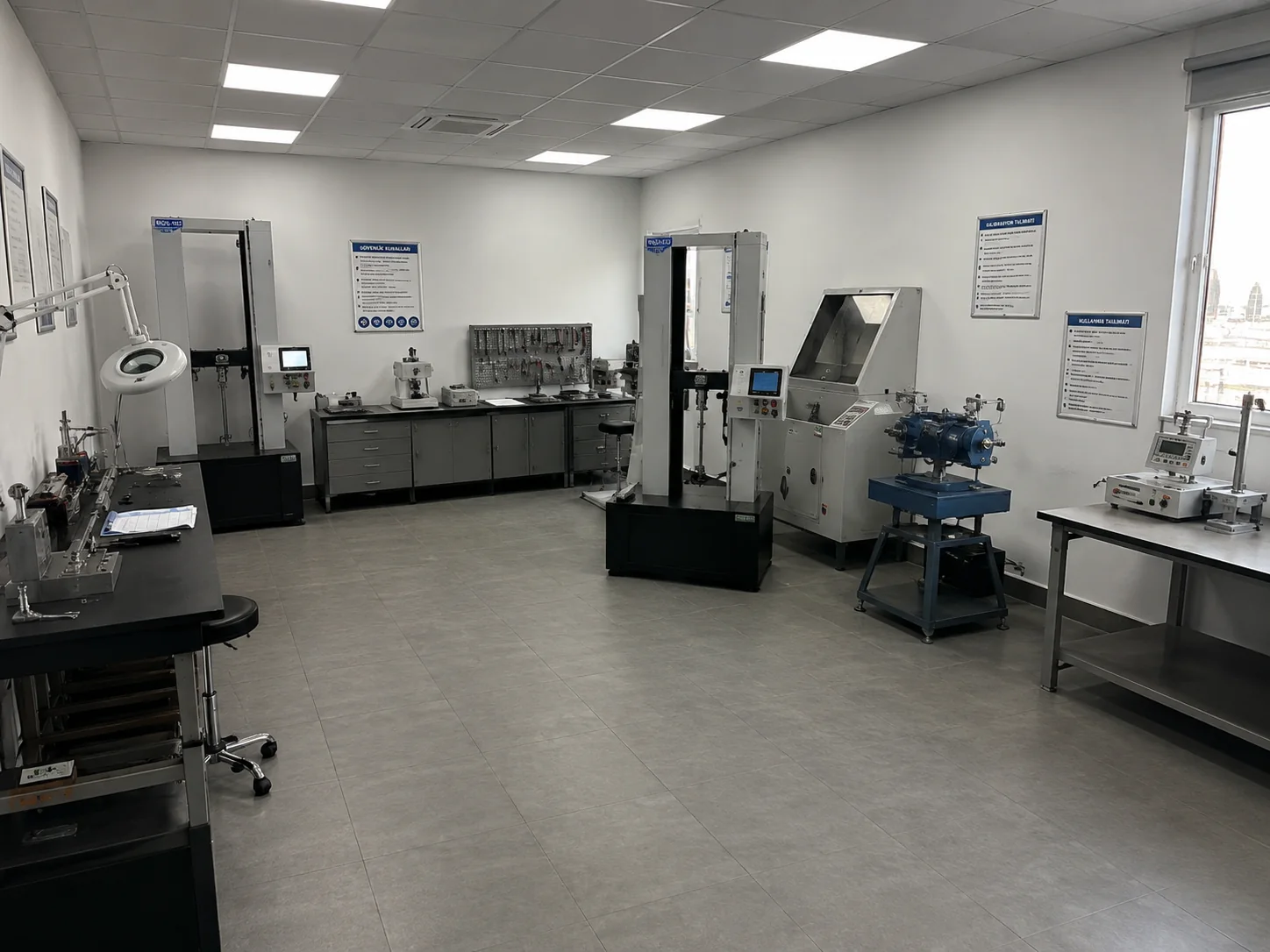
Our quality control process begins with incoming materials and continues through machining, component preparation, assembly, gas filling, force verification, finishing and final product preparation. Some controls are built directly into production. Others are used during product development, sample validation, customer-specific projects or periodic production checks.
The purpose is to find a problem while there is still time to deal with it, not after the product has reached the customer.
Quality & Testing at a Glance
| Quality Capability | Newtone |
|---|---|
| Testing devices and systems | Approximately 30 |
| Force verification during gas filling | Integrated into the filling process |
| Products outside force tolerance | Do not proceed to packaging |
| Additional force checks | Performed at defined intervals before packaging |
| Life cycle testing | Available |
| Salt spray corrosion testing | Available |
| F1 / F2 / F3 / F4 measurement | Available |
| Friction measurement | Available |
| Operating speed measurement | Available |
| Coating thickness measurement | Available |
| Surface examination | Ultrasonic stereo microscopy available |
| Dimensional inspection | Performed throughout production and quality control |
| Material inspection | Begins with incoming material |
| Oil viscosity testing | Available |
| Connection strength testing | Available |
| Pull-out and breakage testing | Available |
| Production traceability | Lot-based |
Not every test listed above is performed on every gas spring. The required controls depend on the product, material, application, production stage and customer requirements.
A useful test is one that tells us something relevant about the product. Simply performing more tests does not automatically make the product better.
Quality Control Starts Before Assembly
A finished gas spring test cannot correct a dimensional or material problem that should have been identified before assembly.
For that reason, quality control begins when materials and components enter the manufacturing process. Dimensions, material condition and relevant product characteristics are checked according to the requirements of the part and production stage.
The same approach continues during machining. A piston rod, tube or machined component that does not meet the required condition should ideally be identified before it becomes part of a finished gas spring.
Finding the issue earlier means less unnecessary processing and less chance of carrying the same problem into later production stages.
Force Verification During Gas Filling
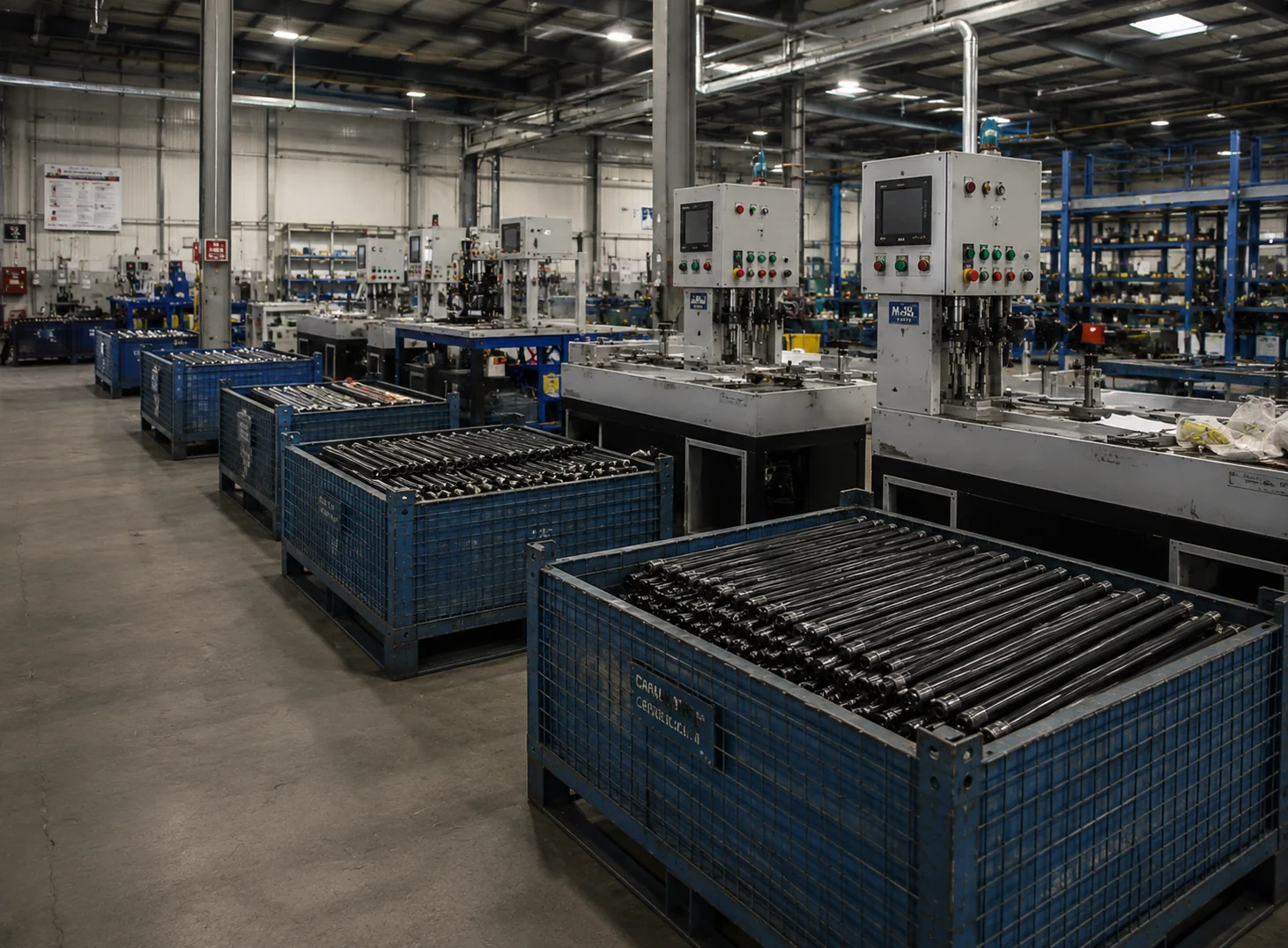
Force is one of the most important functional characteristics of a gas spring. At Newtone, force verification is integrated directly into the gas filling process.
Our gas filling equipment fills the gas spring and measures its force during the same production stage. If the measured force falls outside the defined tolerance range, the system identifies the unit as non-conforming.
That product does not proceed to packaging. Products moving forward from the gas filling stage have therefore already been checked against the required force tolerance.
Before packaging, additional force measurements are also carried out at defined intervals on products that have already passed the filling-stage control. These measurements provide another confirmation that the gas filling process continues to operate consistently.
The two checks serve different purposes. The filling-stage measurement verifies the product. The additional periodic measurement helps confirm the stability of the process.
Force-related customer complaints are very uncommon for us, and integrating force verification into production is an important part of maintaining that consistency.
Understanding Gas Spring Force Measurements
A single nominal force value does not describe everything about how a gas spring behaves during movement.
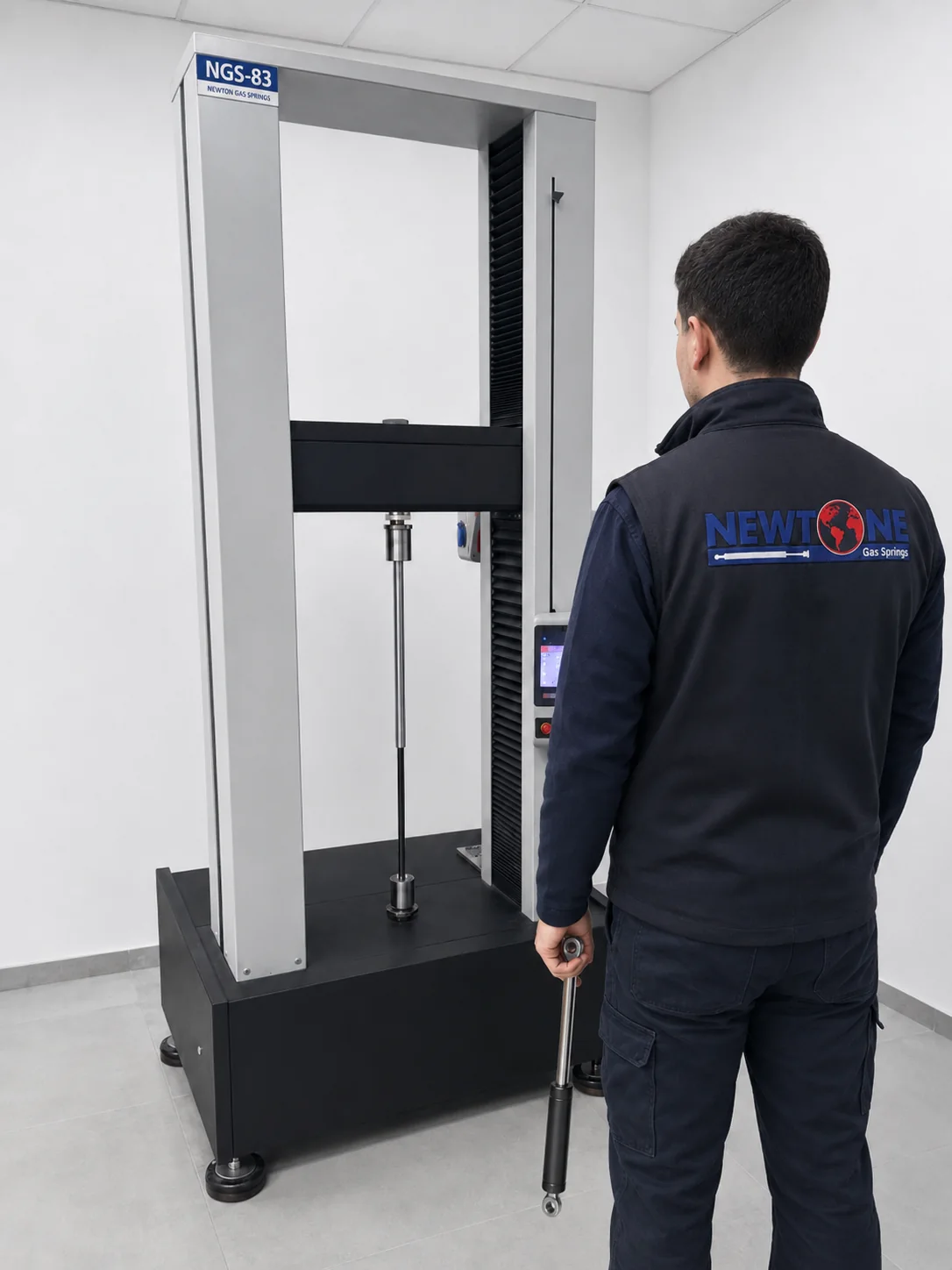
Our dedicated testing systems can evaluate F1, F2, F3 and F4 values, together with friction and operating speed.
These measurements allow our engineering and quality teams to look at gas spring behaviour during compression and extension rather than relying only on one isolated reading.
For some projects, confirming the required nominal force is enough. In other applications, friction, movement characteristics and the way force changes through the stroke also matter.
This type of measurement is particularly useful during sample development, technical investigation and applications where the behaviour of the gas spring needs to be evaluated in greater detail.
Life Cycle and Durability Testing
A gas spring may operate thousands of times during its service life.
A single functional test tells us how the product behaves at that moment. It does not automatically tell us how the same product will behave after repeated operation.
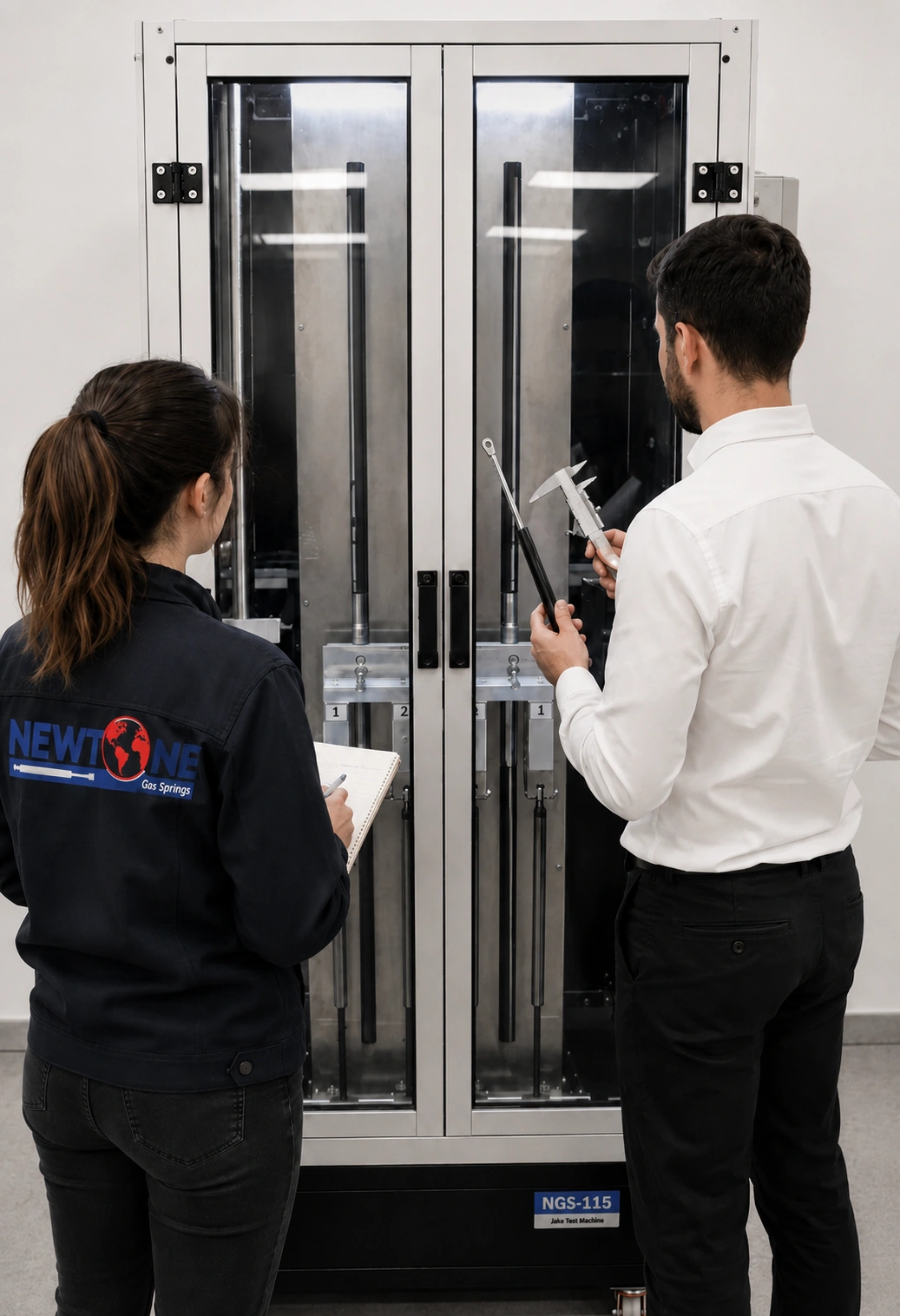
Newtone therefore uses dedicated multi-head equipment for gas spring life cycle testing.
Life cycle testing can be used during product development, validation, internal evaluation and customer-specific projects. Gas springs are repeatedly compressed and extended under defined test conditions so that changes in performance can be evaluated over time.
There is no single cycle number that applies to every gas spring we manufacture. The required cycle count and test conditions depend on the application, product design and validation requirement. A medical application, an industrial mechanism and a vehicle component may each require a different approach.
Corrosion, Coating and Surface Testing
Products used outdoors, in marine environments or in other corrosive conditions may require additional evaluation of the material and surface protection.
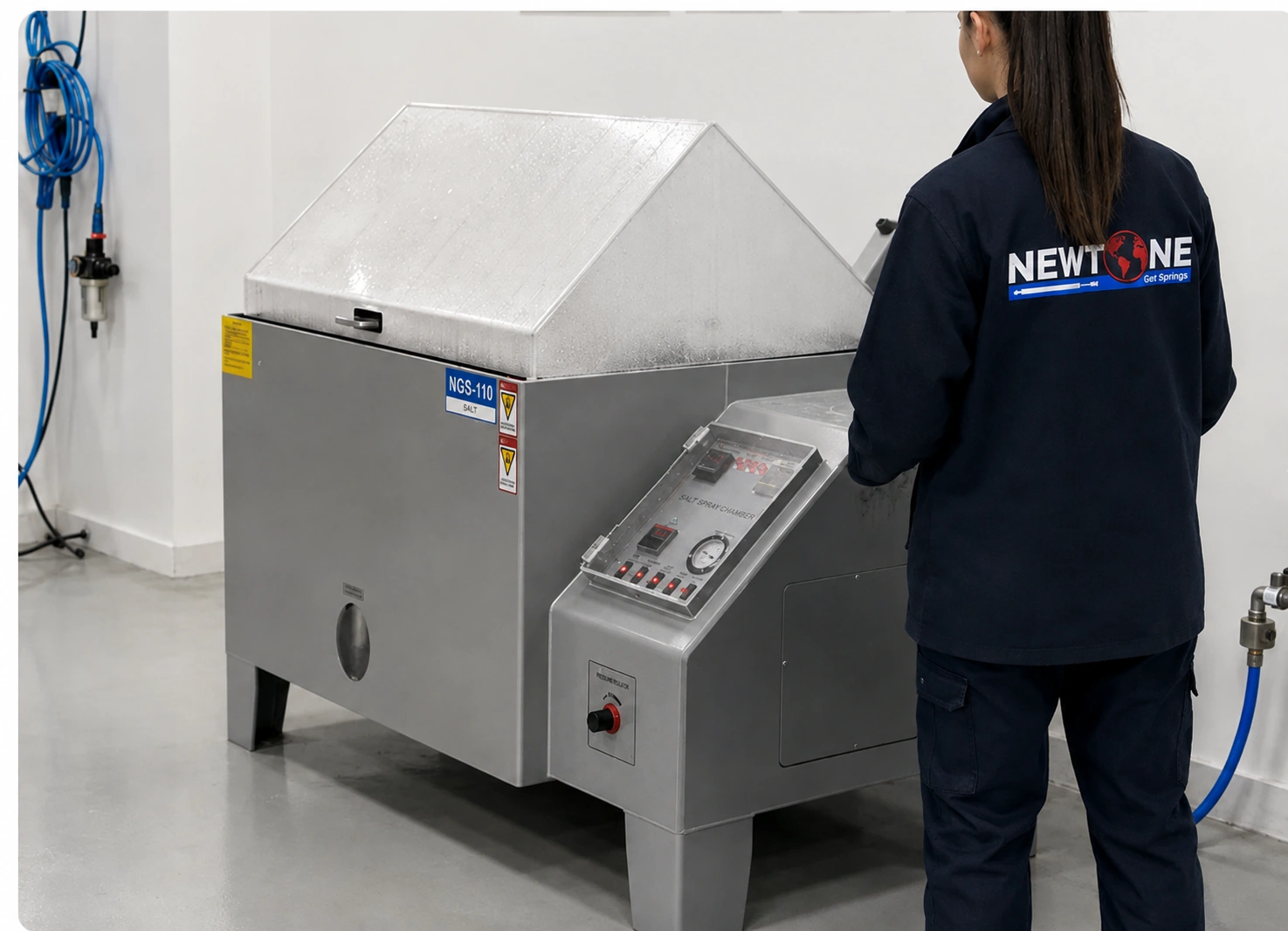
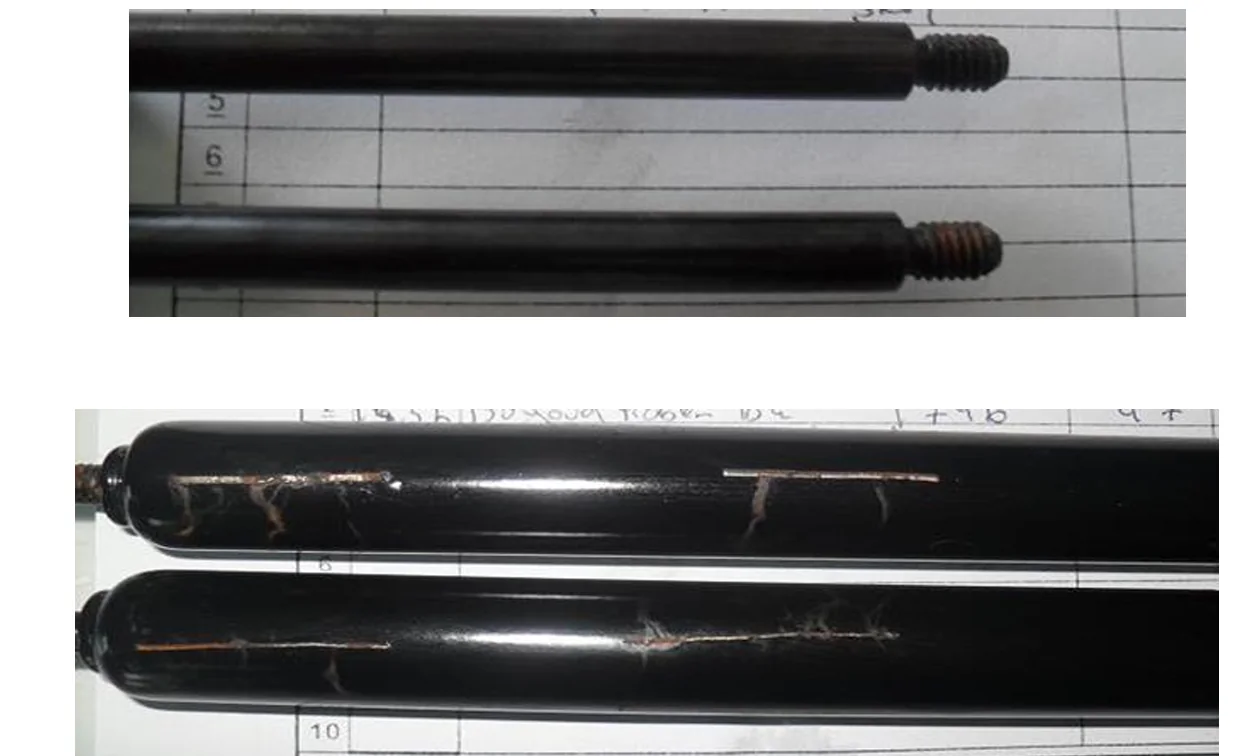
Newtone operates dedicated salt spray corrosion testing equipment for corrosion evaluation where required. Salt spray testing may be used during development, comparison, product validation and customer-specific testing.
It is particularly relevant when evaluating painted or coated carbon steel components and products such as our stainless steel gas springs , where corrosion resistance and material selection form part of the application requirements.
We also use coating thickness measurement devices to evaluate coating conditions and ultrasonic stereo microscopes when closer examination of a surface or component is required.
A surface issue can appear cosmetic at first. Depending on the component and application, however, surface condition may also influence corrosion resistance, sealing behaviour or long-term product performance.
Salt spray testing and microscopic examination are available testing capabilities. They are not automatically performed on every gas spring.
Dimensional and Material Inspection
Gas spring performance depends on many components working together. Piston rods, tubes, machined parts, threads, connection components and finished assembly dimensions all have tolerances that can influence the final product.
Dimensional inspection therefore takes place at different stages of manufacturing rather than only after assembly is complete.
Incoming material inspection provides the first opportunity to identify an issue before additional processing has taken place. Measurements during machining and production provide further opportunities to confirm that parts remain within the required conditions.
Because a large part of our machining and production is handled in-house, engineering, production and quality teams can work closely when a custom dimension or new product configuration needs to be evaluated.
For a closer look at how these parts move from raw material to finished product, see our Gas Spring Production & Custom Manufacturing page.
Connection Strength, Pull-Out and Breakage Testing
A gas spring does not work independently from the components connected to it.
End fittings, connection points and related components transfer force between the gas spring and the application.
Newtone can perform connection strength, pull-out and breakage testing where required. These tests may be used during development, validation, technical investigation or customer-specific projects.
The purpose is not simply to find the point at which a component eventually breaks. What matters is whether the connection performs as expected under the conditions defined for the application.
Oil Viscosity and Internal Performance Checks
Gas pressure is not the only factor that influences gas spring behaviour.
Oil characteristics also play a role in damping and movement.
Newtone has the capability to perform oil viscosity testing as part of its production and quality activities. This can be useful when evaluating damping behaviour, internal performance or operating characteristics.
We do not publish proprietary oil formulations or internal production specifications, but viscosity provides another measurable parameter when product behaviour needs to be investigated.
Traceability Throughout Production
Newtone products are associated with lot-based production records.
When required, relevant production information can be traced to components used for the lot, machines involved in manufacturing and operators associated with production.
This becomes particularly valuable in recurring OEM programs, where the same gas spring may be manufactured repeatedly over months or years.
If a technical question appears later, the lot number gives us somewhere to start.
Without traceability, an investigation can quickly become guesswork. Production records provide a reference for understanding what happened during a specific batch.
What Happens When a Gas Spring Is Outside Tolerance?
Quality control is not based on assuming that every product will always be correct. It depends on having controls capable of identifying when something is not.
Force verification provides a clear example. If a gas spring falls outside the defined force tolerance during filling, the system identifies it as non-conforming and it does not continue to packaging.
Other non-conforming conditions are evaluated according to the product, process and nature of the issue.
Finding a problem early is easier than explaining the same problem after shipment.
Not Every Test Is Performed on Every Gas Spring
Not every test described on this page is performed on every product.
A life cycle test may be important for one application. A salt spray test may be more relevant for another. A new connection design may require pull-out testing, while a standard serial product may not.
Testing priorities can also differ between product families. A standard gas spring and a traction gas spring perform different mechanical functions, so the relevant validation questions are not always identical.
Testing requirements can depend on:
- Product type
- Material
- Application
- Development stage
- Customer specification
- Validation requirement
- Production control needs
Some controls, such as force verification during gas filling, are built directly into the manufacturing process. Other tests are selected when they are technically relevant.
We prefer to explain that distinction clearly rather than suggest that every gas spring receives every test available in our quality department.
Testing Custom and OEM Gas Springs
Custom products often need more than dimensional confirmation.
A project may begin with a complete technical drawing, an existing gas spring, photographs, application dimensions or simply an explanation of what the mechanism is expected to do.
Once the technical configuration has been defined, samples can be manufactured for internal evaluation and customer testing.
Our measurements provide one part of the validation process. The customer’s real application provides another.
A product that behaves correctly on a test device still needs to work correctly when installed in the actual mechanism.
If application testing shows that force, dimensions, damping behaviour or another parameter needs to change, the product can be revised before the final specification is released for serial production.
For custom manufacturing, quality is not only about confirming that a drawing was followed. The product also has to work in the application it was designed for.
Testing Equipment at Newtone
Newtone uses approximately 30 testing and inspection devices and systems across production and quality activities.
Some of the main equipment includes:
| Testing Equipment | Quantity |
|---|---|
| F1 / F2 / F3 / F4, friction and speed test systems | 4 |
| Salt spray corrosion testers | 3 |
| Ultrasonic stereo microscopes | 2 |
| Coating thickness measurement devices | 4 |
| Oven temperature measurement devices | 4 |
| Horizontal force measurement systems, 4-head | 3 |
| Four-head life cycle testing systems | 4 |
| Other testing and inspection devices | Additional systems within approximately 30 total devices |
The number of machines is useful information, but equipment alone does not create product quality.
What matters is what is measured, when it is measured and what happens when the result is outside the expected condition.
Quality Control for International OEM Supply
For an international OEM supplier, a preventable problem becomes much harder to solve once the product has travelled thousands of kilometres and entered a customer’s warehouse or production line.
This makes prevention, traceability and production consistency especially important.
Packaging is part of that process too. We pay attention to product surfaces, protective materials, labels, cartons, bags and packaging condition before shipment.
A gas spring should not only leave the factory working correctly. It should arrive that way too.
Management Systems and Quality Framework
Our production and quality activities operate within Newtone’s broader management framework covering quality management, customer satisfaction, environmental responsibility, risk management and occupational health and safety.
This framework includes ISO 9001, ISO 10002, ISO 14001, ISO 31000 risk management guidelines and ISO 45001 related management practices and documentation.
Current certificates and conformity documents are provided separately through our certification resources.
Common Questions About Gas Spring Testing
Does Newtone test gas spring force during production?
Yes. Force measurement is integrated directly into the gas filling process. Products outside the defined force tolerance are identified as non-conforming and do not proceed to packaging.
Does Newtone perform life cycle testing?
Yes. Newtone operates dedicated four-head life cycle testing systems for development, validation and other testing requirements.
Can Newtone perform salt spray corrosion testing?
Yes. Newtone operates dedicated salt spray corrosion testers for corrosion evaluation where required.
Does Newtone measure F1, F2, F3 and F4 values?
Yes. Dedicated systems are available for F1, F2, F3 and F4 measurements together with friction and operating speed evaluation.
Are all available tests performed on every gas spring?
No. The required testing depends on the product, application, material, customer specification and validation needs. Some controls are integrated into the manufacturing process, while others are used when technically relevant.
Can Newtone trace a production lot?
Yes. Lot-based production records allow relevant production information to be traced to components, machines and operators when required.
Talk to Our Engineering and Quality Teams
If your application has specific testing, validation or quality requirements, these can be reviewed during the project stage.
A complete technical drawing is useful, but it is not required to begin. An existing gas spring, application photographs, dimensions, operating conditions or customer testing requirements can also provide enough information for an initial evaluation.
Our engineering and quality teams can review the application together and determine which measurements or validation steps are appropriate before sample or serial production.
Talk to Newtone Gas Springs about your testing, validation or gas spring project.
Share your application details, drawings, samples or testing requirements and our engineering and quality teams can review the next step.
