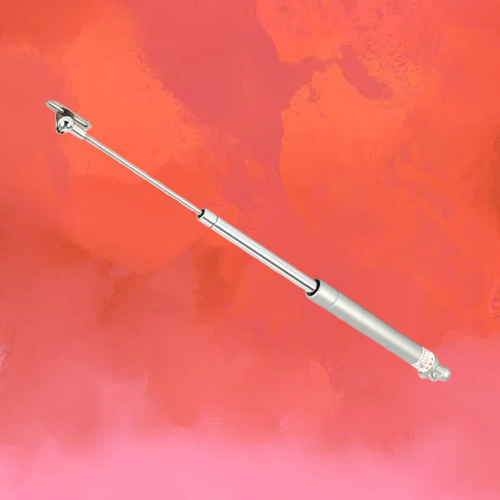
Telescopic Gas Springs: When Long Stroke Is Needed in a Compact Space
In some applications, a standard gas spring simply does not provide enough stroke for the space available. The movement may require a longer extension, but the installed length still needs to remain compact. That is where a telescopic gas spring becomes especially useful.
Unlike a conventional gas spring, a telescopic design is built to deliver more travel from a shorter closed length. In practical terms, this makes it a strong option for products where installation space is limited but the opening or lifting movement still needs to be longer.
Depending on the market or product description, this type of solution may also be referred to as a 3 section gas spring or a nested gas spring. While the wording may vary, the core idea remains the same: a multi-section gas spring designed to achieve longer stroke in a more compact configuration.
What is a telescopic gas spring?
A telescopic gas spring is a gas spring built with multiple internal sections that extend progressively during operation. Instead of using only a single rod and cylinder arrangement, the design allows one section to move within another, creating a longer overall extension from a shorter installed length.
This is the reason the product is sometimes described as a 3 section gas spring. In this kind of structure, the gas spring is built in stepped sections rather than in a conventional single-stage format.
The term nested gas spring is also used because the individual sections are arranged inside one another in a compact form before extension.
In simple terms, the purpose of the design is straightforward: to provide more stroke where space is limited.
Why telescopic gas springs are used
Many applications need longer movement but do not have enough room for a long gas spring body when the product is closed. That is where telescopic gas springs offer a practical advantage.
They can help:
- achieve longer extension in compact layouts
- support lids, covers, and access panels with limited installation depth
- create cleaner movement solutions in confined spaces
- improve packaging flexibility in technical products
- provide an alternative where standard gas springs are too long when compressed
For engineers and manufacturers, this can be especially helpful when product design is already constrained by surrounding components, enclosure depth, or movement geometry.
3 section gas springs and compact motion design
The phrase 3 section gas spring is commonly used because this type of product often includes three working sections within the overall assembly. This structure makes it possible to extend further than a standard design with similar closed length.
In applications such as access doors, furniture systems, machine covers, storage lids, and fitness equipment, this kind of compact stroke solution can be a major design advantage.
A telescopic gas spring does not replace every standard gas spring. But where space is limited and longer travel is needed, it can solve a problem that a conventional format cannot address as effectively.
Nested gas springs and multi-section construction
The term nested gas spring usually refers to the way the sections are arranged inside one another when the spring is in its closed position. This nested construction is what allows the gas spring to remain compact before extension.
Compared with a single-body gas spring, this design is more specialized. It requires precise manufacturing and a more controlled internal structure so that extension remains stable and reliable throughout the stroke.
That is why telescopic gas springs are often selected for applications that need not only compact packaging, but also repeatable movement and dependable long-term performance.
Typical dimensions and layout
Because telescopic gas springs are usually more application-specific than standard models, they are often produced according to project requirements rather than selected from a narrow standard range.
A typical 3 section configuration may include:
- first piston rod: 6 mm (0.24 in)
- second piston tube: 12 mm (0.47 in)
- third outer cylinder: 22 mm (0.87 in)
This kind of staged design is one of the reasons telescopic gas springs can offer long travel while maintaining a relatively short compressed length.
The final dimensions always depend on the application, but this structure gives a good idea of how a compact multi-section solution is formed.
Force and stroke range
The required force of a telescopic gas spring depends on the load, installation geometry, and movement behavior of the application.
In many cases, these products can be produced in force ranges such as 50 N (11.2 lbs) to 350 N (78.7 lbs). Stroke options may range from 30 mm (1.18 in) to 500 mm (19.69 in), depending on the design and available space.
This makes telescopic gas springs suitable for a wide range of applications where compact length and longer extension need to work together.
Material options, including Stainless Steel 316L
Material selection is an important part of gas spring performance, especially when the operating environment is more demanding than normal indoor use.
Depending on the project, telescopic gas springs can be produced in different material options, including steel and stainless steel configurations. For applications where corrosion resistance is especially important, we can also produce telescopic gas springs in Stainless Steel 316L.
This may be relevant in environments involving:
- humidity
- outdoor exposure
- washdown conditions
- corrosive surroundings
- marine use
- hygienic or sensitive applications
In these cases, the choice of material is not only about appearance. It is part of making sure the gas spring is suitable for the real conditions of the product.
Surface treatment and durability
Depending on the selected material and project requirements, surface treatment options may also play an important role in durability.
Typical finishing approaches may include painted tube surfaces, hard chrome plated rods, or other wear-resistant treatments intended to improve corrosion performance and surface quality. The right combination depends on the design of the gas spring and the service conditions it will face.
As with any gas spring, durability is closely linked to correct specification, manufacturing quality, and the real working environment.
Why precision matters in telescopic gas spring production
A telescopic gas spring is more complex than a standard gas spring because it includes multiple moving sections working together. For that reason, precision in manufacturing becomes even more important.
Tube quality, rod finish, alignment, sealing, internal fit, and surface consistency all affect how the product performs over time. A properly produced telescopic gas spring should support:
- stable extension and retraction
- consistent force behavior
- reduced risk of leakage
- reliable movement over repeated cycles
- suitable long-term performance under normal conditions
In multi-section designs, manufacturing quality is not a secondary detail. It is directly connected to performance.
Service life expectations
In many applications, service life is one of the first things buyers want to understand. That is especially true when the gas spring will be opened and closed repeatedly over time.
Depending on the design, material selection, and operating conditions, telescopic gas springs may be produced for service life expectations such as 30,000 cycles or more under suitable use conditions.
Actual performance always depends on the application itself, including load, mounting geometry, environment, and cycle frequency. But when selected correctly, a telescopic gas spring can provide a durable and reliable motion solution in compact designs.
What should be considered before selecting a telescopic gas spring?
Selecting the right telescopic gas spring means looking at the full application, not only at the nominal force.
Important points to review include:
- required force
- required stroke
- available compressed length
- extension space
- mounting geometry
- end fittings
- load direction
- environmental exposure
- material requirements
- expected cycle life
This is especially important with telescopic or nested designs, because the main value of the product lies in how efficiently it combines longer stroke with limited installation space.
When a custom telescopic gas spring is the better choice
In many cases, telescopic gas springs are chosen precisely because the application does not fit a standard solution.
That is why custom production is often the better route. A custom telescopic gas spring can be designed according to:
- the available closed length
- the required stroke
- the force target
- end fitting style
- material option
- environmental conditions
This allows the gas spring to fit the real product design rather than forcing the product to adapt around a standard part.
Conclusion
A telescopic gas spring is a practical solution when an application needs longer stroke than a standard gas spring can provide within the available space. By using a multi-section design, it becomes possible to combine compact installation with extended travel in a more efficient way.
Depending on the terminology used, the same product may also be described as a 3 section gas spring or a nested gas spring. While the names may differ, the core advantage remains the same: more movement from a more compact installed length.
For demanding environments, Stainless Steel 316L telescopic gas springs can also be considered where corrosion resistance is part of the application requirement.
Need help selecting the right telescopic gas spring?
If your project requires longer stroke in a compact installation space, our team can help you review the most suitable telescopic gas spring solution based on your technical and environmental requirements.